Your gift is 100% tax deductible.
Adrenal Cancer
If you have adrenal cancer or are close to someone who does, knowing what to expect can help you cope. Here you can find out all about adrenal cancer, including risk factors, symptoms, how it is found, and how it is treated.
About adrenal cancer
Adrenal cancers are tumors that form from the adrenal glands, small organs that sit on top of each kidney. These cancers can spread to other parts of the body.
Some adrenal cancers can make hormones that might cause specific symptoms. Symptoms depend on what hormones they make. Others may cause symptoms as they grow and press on nearby organs, nerves, or blood vessels.
Adrenal tumors are quite common and might be found on imaging done for another reason. However, many of these tumors are not cancer (benign).
About the adrenal glands
The adrenal glands are small organs that sit on top of each kidney in the upper abdomen (belly).
Each adrenal gland has 2 parts: the cortex and the medulla.
The cortex is the outer part of the adrenal gland. This is where most tumors develop. The cortex makes certain hormones for the body, including:
- Cortisol, which helps the body handle stress.
- Aldosterone, which works with the kidneys to regulate the amount of salt in the blood and maintain normal blood pressure.
- Adrenal androgens, also called dehydroepiandrosterone or DHEA, which can be converted into sex hormones (estrogen and testosterone) in other parts of the body. Normally, adrenal androgens make up only a small portion of the total sex hormones in the body. Most sex hormones are made by the testicles (in men) or ovaries (in women).
The medulla is the center of the adrenal gland. It is really part of the nervous system. The medulla makes hormones such as:
- Epinephrine, or adrenaline, a hormone that increases heart rate and blood pressure in response to stress or physical activity.
- Norepinephrine, a hormone similar to epinephrine, released during stress to help the body and brain respond.
- Dopamine, a hormone that drives the reward center of your brain. It plays a role in memory, concentration, and motivation.
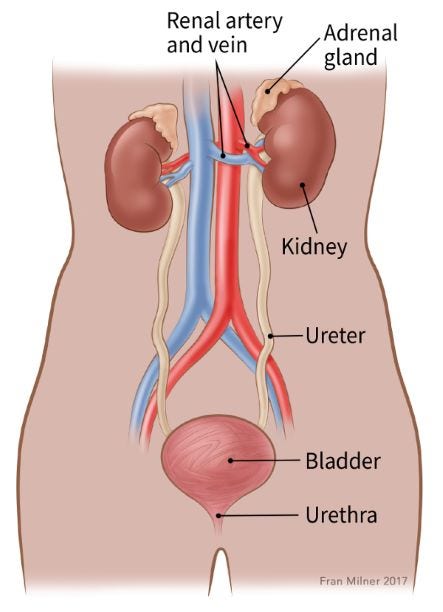
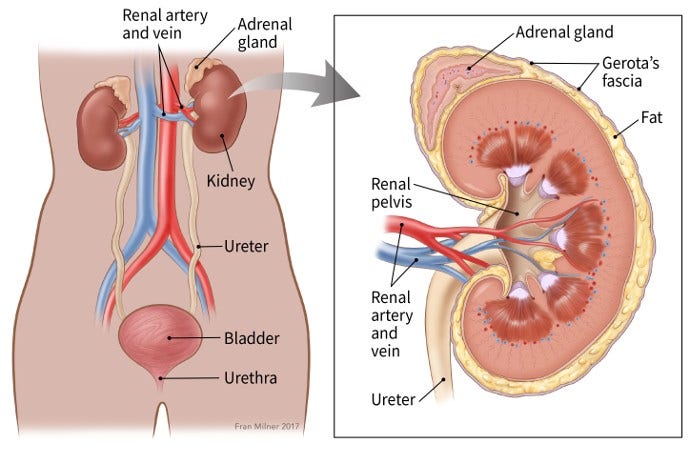
Adrenocortical tumors
Many adrenocortical tumors are discovered when CT or MRI scans of the abdomen are done for another reason. When they are found this way, it is called an incidental finding. These tumors are called adrenal incidentalomas if the mass is larger than 1 cm (less than ½ inch).
No matter how they are found, all adrenocortical tumors should be determined to be either:
- Adrenocortical adenomas: Benign tumors that don’t spread beyond the adrenal gland.
- Adrenocortical carcinomas: Cancers that can spread beyond the adrenal gland.
In general, the imaging tests can help doctors understand if the tumor is cancer. They can tell this based on the tumor’s size, shape, and how light or dark it appears on the test.
Adrenocortical adenoma
Most adrenal cortex tumors are benign (not cancer) adenomas. These tumors are usually small (less than 4 cm) and occur in only one adrenal gland. Most people with adrenal adenomas have no symptoms.
These tumors are categorized by whether they make hormones (functional) or do not make hormones (non-functional). Most adenomas are non-functional and don’t cause any symptoms. However, the small percentage of adrenocortical adenomas that do make hormones can cause certain medical conditions, such as:
- Cushing’s syndrome, which is caused by high levels of cortisol
- Primary aldosteronism, which is caused by high levels of aldosterone
The extra hormones can cause the same symptoms as those from adrenocortical carcinomas (cancers). To learn more, see Signs and Symptoms of Adrenal Cancers.
How these tumors are treated depends on:
- Whether the tumor is causing symptoms
- If there are concerning features on imaging scans
If an adenoma is causing symptoms, either by making hormones or by pressing on nearby nerves or blood vessels, the healthcare team will consider surgery. Some people who have hormone-related symptoms who can’t undergo surgery because of other health problems, might consider medications to lower hormone levels or treat their symptoms.
Surgery is considered if the imaging scan shows:
- That the tumor is larger than 4 cm (almost 1 ½ inches)
- The tumor has a relatively low percentage of fat (called lipid-poor)
- The tumor has irregular borders and appearance
If an adenoma is not causing any symptoms, is smaller than 4 cm, and has no concerning features on scans, the care team might suggest watching and waiting. This is a plan to do imaging tests after a certain amount of time to check if the tumor grows or changes over time. If the tumor changes in size or symptoms develop, the care team might suggest surgery at that time. Some adrenocortical adenomas may never need treatment.
Adrenocortical carcinoma (adrenal cancer)
A tumor that forms from the adrenal cortex and can spread to other parts of the body is called an adrenocortical carcinoma. These are also called adrenal cancers. Some adrenal cancers make extra hormones (functional) and can cause the same symptoms as a functional adrenocortical adenoma.
To learn more, see Signs and Symptoms of Adrenal Cancers.
Adrenal cancers that do not make hormones (non-functional) may cause symptoms if they press on nearby nerves or blood vessels due to their size or location.
How adrenal cancer is treated depends on:
- If it has spread to other parts of the body
- If the tumor can safely be removed
If the cancer has not spread to other parts of the body, the tumor can often be removed. If the tumor can safely be removed, then the care team will also suggest removing the adrenal gland. This procedure is called an adrenalectomy.
However, if the cancer can’t be removed completely or safely, does not meet all these criteria, then an adrenalectomy is often not recommended. Sometimes, an adrenal tumor might be removed to treat symptoms such as pain or high hormone levels.
If surgery is not an option for you, your doctor may discuss other options such as:
Adrenal medullary tumors
There are two main types of adrenal tumors that can form in the medulla, or center, of the adrenal gland.
A pheochromocytoma is a tumor of the adrenal gland. Pheochromocytomas can either be benign (not cancer) or cancerous.
Some pheochromocytomas make hormones, while others do not. Pheochromocytomas that make hormones can cause symptoms such as:
- Headaches
- Very fast heartbeat (palpitations)
- Sweating
- High blood pressure that tends to be difficult to control with medicine
While most pheochromocytomas occur by chance, up to 1 in 4 are caused by a family cancer syndrome such as:
- MEN2
- Von Hippel-Lindau syndrome
- Neurofibromatosis type 1
- Hereditary pheochromocytoma and paraganglioma syndromes
Pheochromocytomas that are large or make hormones are often treated with surgery to remove the adrenal gland. If the tumor has spread to other parts of the body, chemotherapy or targeted therapy may be an option.
Neuroblastoma is a rare cancer of the early nerve cells, called neuroblasts. These make up the nerves in our bodies. It can be found anywhere that sympathetic nerves live, including the adrenal medulla. It is the most common cancer in infants, and it most often occurs in children under the age of 5.
To learn more, see Neuroblastoma.
Metastatic cancer in the adrenal gland
Most cancers found in the adrenal gland did not start there. Instead, they started in other organs or tissues and then spread (metastasized) through the bloodstream to the adrenal glands. Certain types of cancer can spread to the adrenal glands, such as:
When cancers from other parts of the body spread to the adrenal glands, they are not considered adrenal cancer. Under the microscope, the cells look like the part of the body where the cancer started, not like adrenal cells. They are named and treated based on the place where they started.
This information is possible thanks to people like you.
We depend on donations to keep our cancer information available for the people who need it most.