Your gift is 100% tax deductible.
Lung Neuroendocrine Tumor
If you have a lung neuroendocrine tumor (NET) or are close to someone who does, knowing what to expect can help you cope. Here you can find out all about lung NETs, including risk factors, symptoms, how they are found, and how they are treated.
About lung neuroendocrine tumors
Lung NETs, also called carcinoid tumors, are uncommon growths that start in neuroendocrine cells in the lung. Although neuroendocrine cells are also found in other parts of the body, only tumors that begin in the lungs are called lung NETs. These cancers usually grow more slowly than other types of lung cancer.
NETs are more common in the digestive system (see Gastrointestinal Carcinoid Tumors and Pancreatic Cancer), but the second most common place is in the lungs.
The lungs
To understand lung NETs, it helps to know about the lungs as well as the neuroendocrine system.
The lungs are sponge-like organs in your chest. Their main functions are to take in oxygen and get rid of carbon dioxide.
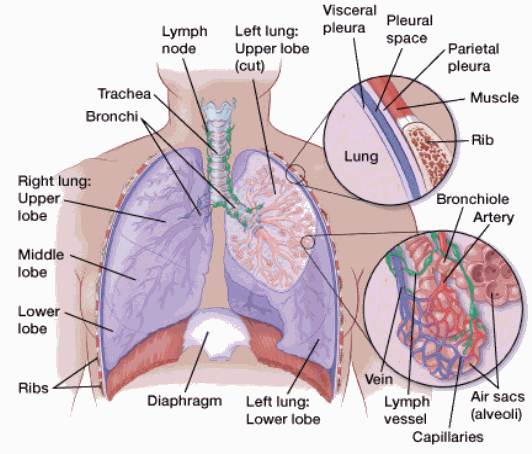
Your right lung has 3 sections, called lobes. The left lung has 2 lobes. It is smaller because the heart takes up room on that side of the body.
When you inhale, air enters through your mouth and nose and goes through the trachea (windpipe). The trachea divides into tubes called the bronchi (singular, bronchus), which enter the lungs and divide into smaller branches called the bronchioles.
At the end of the bronchioles are tiny air sacs known as alveoli. Many tiny blood vessels run through the alveoli. They absorb oxygen from the inhaled air into your bloodstream and pass carbon dioxide, a waste product from the body, into the alveoli where it is expelled from the body when you exhale.
A thin lining called the pleura surrounds the lungs. The pleura protects your lungs and helps them slide back and forth as they expand and contract during breathing. The space inside the chest that contains the lungs is called the pleural space or pleural cavity.
Below the lungs, a thin, dome-shaped muscle called the diaphragm separates the chest from the abdomen. When you breathe, the diaphragm moves up and down, forcing air in and out of the lungs.
The neuroendocrine system
The neuroendocrine system has cells that act both like nerve cells and hormone-making endocrine cells. These cells don’t form an actual organ. Instead, they are scattered throughout organs like the esophagus, stomach, pancreas, intestines, appendix, and lungs.
Neuroendocrine cells in the lungs can have several different functions. They may:
- Help control air and blood flow in the lungs
- Help control the growth of other types of lung cells
- Detect levels of oxygen and carbon dioxide in the air we breathe and then release chemical messages to help the lungs adjust to any changes
People who live at higher altitudes have more lung neuroendocrine cells, probably because there is less oxygen in the air they breathe.
Types of lung neuroendocrine tumors
There are 2 types of lung NETs:
- Low grade NETs (typical carcinoids) tend to grow slowly and rarely spread beyond the lungs. About 9 out of 10 lung NETs are low grade. They do not seem to be associated with smoking.
- Intermediate grade NETs (atypical carcinoids) grow faster and are more likely to spread to other parts of the body than low grade NETs of the lung. Intermediate grade NETs are less common than low grade NETs and tend to occur more often in people who smoke.
NETs of the lung are sometimes classified by where they form. The tumor’s location is important because it can affect which symptoms a patient has and how the tumor is treated.
- Most lung NETs are located centrally. They form in the walls of large airways (bronchi) near the center of the lungs. They are usually low grade (typical carcinoids).
- Other lung NETs are located peripherally. They form in the walls of smaller airways (bronchioles) toward the outer edges of the lungs. They are also usually low grade (typical carcinoids).
In addition to NETs of the lung, there are other types of NETs that start in the lungs: small cell lung cancer and large cell neuroendocrine carcinoma, which is a type of non-small cell lung cancer. These lung cancers are treated differently, so it's important to know exactly what type you have.
- Written by
- References

Developed by the American Cancer Society medical and editorial content team with medical review and contribution by the American Society of Clinical Oncology (ASCO).
Granberg D, Juhlin CC, Falhammar H, Hedayati E. Lung Carcinoids: A Comprehensive Review for Clinicians. Cancers (Basel). 2023 Nov 16;15(22):5440. doi: 10.3390/cancers15225440.
Horn L, Eisenberg R, Guis D et al. Chapter 72: Cancer of the Lung – Non-small Cell Lung Cancer and Small Cell Lung. In: Niederhuber JE, Armitage JO, Dorshow JH, Kastan MB, Tepper JE, eds. Abeloff’s Clinical Oncology. 6th ed. Philadelphia, Pa. Elsevier: 2019.
National Comprehensive Cancer Network. NCCN Clinical Practice Guidelines in Oncology: Neuroendocrine and Adrenal Tumors. V.3.2025. Accessed at https://www.nccn.org/professionals/physician_gls/pdf/neuroendocrine.pdf on September 30, 2025.
Last Revised: December 17, 2025
American Cancer Society medical information is copyrighted material. For reprint requests, please see our Content Usage Policy.