Your gift is 100% tax deductible.
Signs and Symptoms of Brain Tumors in Adults
Brain tumors and spinal cord tumors can cause different signs and symptoms, depending on where they are and how fast they are growing.
Signs and symptoms might develop gradually and become worse over time, or they can happen suddenly, such as with a seizure.
General symptoms of brain tumors
Tumors in any part of the brain might increase the pressure inside the skull (known as intracranial pressure). This can be from growth of the tumor itself, swelling in the brain, or blockage of the flow of cerebrospinal fluid (CSF). Increased pressure can lead to general symptoms such as:
- Headache
- Seizures
- Nausea
- Vomiting
- Blurred vision
- Balance problems
- Personality or behavior changes
- Drowsiness or even coma
Headaches that tend to get worse over time are a common symptom of brain tumors, occurring in about half of people with brain tumors. (Of course, most headaches are not caused by tumors.)
As many as half of people with brain tumors will have seizures at some point. The type of seizure may depend on where the tumor is. Sometimes this is the first sign of a brain tumor, but fewer than 1 in 10 first seizures are caused by brain tumors.
Symptoms of tumors in different parts of the brain or spinal cord
Tumors in different parts of the brain or spinal cord can cause different symptoms.
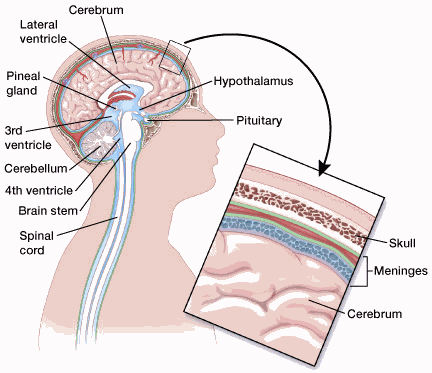
- Tumors in the parts of the cerebrum (the large, outer part of the brain) that control movement or sensation can cause weakness or numbness of part of the body, often on just one side.
- Tumors in or near the parts of the cerebrum responsible for language can cause problems with speech or even understanding words.
- Tumors in the front part of the cerebrum can sometimes affect thinking, personality, and language.
- If the tumor is in the cerebellum (the lower, back part of the brain that controls coordination), a person might have trouble walking; trouble with precise movements of the hands, arms, feet, and legs; problems swallowing or synchronizing eye movements; and changes in speech rhythm.
- Tumors in the back part of the cerebrum, or around the pituitary gland, the optic nerve, or certain other cranial nerves can cause vision problems.
- Tumors in or near other cranial nerves might lead to hearing loss (in one or both ears), balance problems, weakness of some facial muscles, facial numbness or pain, or trouble swallowing.
- Spinal cord tumors can cause numbness, weakness, or lack of coordination in the arms and/or legs (usually on both sides of the body), as well as bladder or bowel problems.
The brain also controls functions of some other organs, including hormone production, so brain tumors can also cause many other symptoms not listed here.
If you have symptoms
Having one or more of the symptoms above does not necessarily mean that you have a brain or spinal cord tumor. All of these symptoms can have other causes. Still, if you have any of these symptoms, especially if they don’t go away or get worse, see a doctor so the cause can be found and treated, if needed.
- Written by
- References

Developed by the American Cancer Society medical and editorial content team with medical review and contribution by the American Society of Clinical Oncology (ASCO).
Dorsey JF, Salinas RD, Dang M, et al. Chapter 63: Cancer of the central nervous system. In: Niederhuber JE, Armitage JO, Doroshow JH, Kastan MB, Tepper JE, eds. Abeloff’s Clinical Oncology. 6th ed. Philadelphia, Pa: Elsevier; 2020.
National Cancer Institute. Central Nervous System Tumors Treatment (PDQ) – Health Professional Version. 2025. Accessed at https://www.cancer.gov/types/brain/hp/adult-brain-treatment-pdq on September 5, 2025.
Wong ET, Wu JK. Overview of the clinical features and diagnosis of brain tumors in adults. UpToDate. 2025. Accessed at https://www.uptodate.com/contents/overview-of-the-clinical-features-and-diagnosis-of-brain-tumors-in-adults on September 5, 2025.
Last Revised: January 5, 2026
American Cancer Society medical information is copyrighted material. For reprint requests, please see our Content Usage Policy.
American Cancer Society Emails
Sign up to stay up-to-date with news, valuable information, and ways to get involved with the American Cancer Society.