
VOICES of Black Women Researchers Meeting Challenges to Increase Enrollment
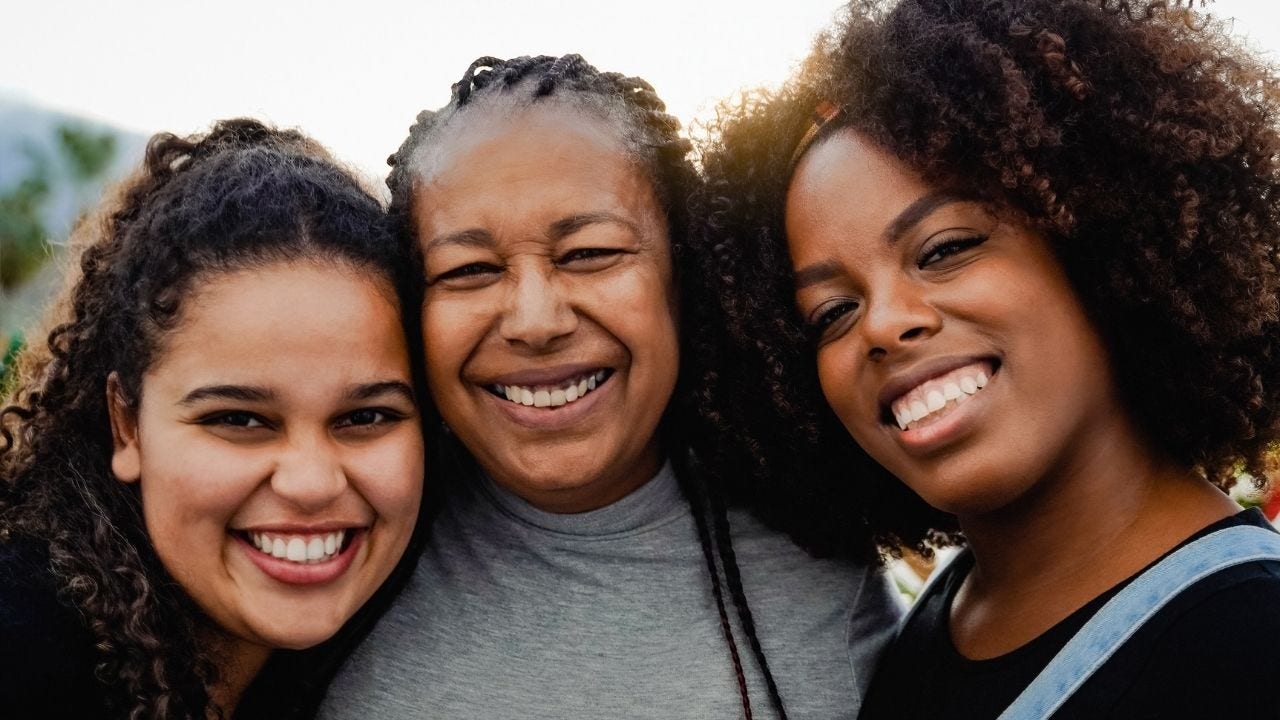
Landmark study is documenting participants’ experiences to target long-standing health disparities and reveal what data alone cannot explain
When American Cancer Society researchers launched the VOICES of Black Women study in 2024, they knew they were stepping into complex scientific, cultural, and social terrain.
To reach their ambitious enrollment goal of 100,000 Black women, they needed to develop a sense of urgency, create an effective outreach strategy, and overcome years of mistrust stemming from the historical exploitation of Black communities in the name of scientific research.
But navigating these challenges would be worth it for lead researchers Alpa Patel, PhD, and Lauren McCullough, PhD, if they could answer and address this decades-old question: Why are Black women diagnosed with more aggressive cancers and continue to face higher death rates from cancer?
“The last two years have been focused on increasing awareness around VOICES,” McCullough said. “But now we're really focused on compelling people to act. When more Black women enroll, we get closer to the information we need for solutions.”
An effort to understand the persistent cancer burden
Black women have historically faced higher risks of cancer incidence and deaths than White women. For instance, compared to White women, Black women are:
-
12% more likely to die of cancer
-
38% more likely to die from breast cancer
-
Twice as likely to die from endometrial cancer
Yet, getting to the root of these disparities has been difficult, in large part because Black women remain underrepresented in research, including cancer clinical trials, studies, and surveys.
“This is a long-term study to better understand why Black women get more aggressive types of cancer,” McCullough explained. “Black women have been largely underrepresented in previous studies, which really limits our ability to speak specifically to this population.”
Though access, insurance, and screening play major roles in cancer outcomes, those known barriers explain only part of the inequity.
“Even when they have access, even when they have insurance, Black women still have poor outcomes compared to their counterparts,” McCullough said. “That’s the piece that is really unexplained.”
Despite advances in overall survivorship, disparities among Black women remain unchanged.
“A disparity that lasts 40 years is really unfathomable,” McCullough says, “I'm hoping this study can rapidly begin to narrow that gap. It will be an important barometer for the impact of this study. How are we progressing in terms of narrowing the mortality disparity?”
Building trust where history has created barriers
The VOICES team always knew trust would be among the most important challenges to overcome.
History is laced with examples of Black communities being exploited during medical research. From the Tuskegee Syphilis Study, in which Black men were deceived and denied treatment for decades, to the story of Henrietta Lacks, whose cells were taken without her consent and used in research. These examples and others have sown seeds of medical mistrust among some Black Americans.
“We do acknowledge the mistrust that is prevalent in this community, and that mistrust is valid,” McCullough said. She noted that the study was intentionally built “within community,” with Black women leading the science and serving as ambassadors.
Participants must also trust that the data they give researchers will be secure and private.
"Common questions we get from participants in our studies, as well as in recruiting for VOICES, are: 'Who has access to the data? How are you protecting my data?” Patel said. "These are barriers to overcome, and that's where there is power in the American Cancer Society. There is trust in our brand. More than 2.5 million participants have trusted us with their data over the years. We've conducted large population studies that have improved cancer outcomes since the 1950s, and the study is funded by the organization. Being housed at American Cancer Society is a strength."
VOICES is asking Black women to share deeply personal information about their lifestyle, behavioral, and reproductive habits.
“We ask questions that may be emotionally triggering or sensitive in nature,” Patel said.
Participants may be asked about:
-
Diet, physical activity, and medications
-
Reproductive history
-
Social support and caregiving
-
Racism and discrimination
-
Childhood trauma
-
Beauty and hair care practices
-
Environmental exposures
These topics, sometimes overlooked in other areas of cancer research, may hold clues to disparities. The goal is to understand how Black women’s experiences may factor into cancer risk and overall health.
VOICES is designed as a fully online study. Women can enroll and participate from anywhere, without traveling, taking time off work, or arranging childcare.
“There’s no geographic boundary,” Patel said. “You can participate from wherever you are.”
Refining strategy and creating partnerships
With enrollment at just over 6,000 after the first two years, VOICES researchers continue to refine the strategy and broaden outreach.
"VOICES of Black Women is about more than understanding disparities; it's about generating the evidence needed to change them," said American Cancer Society Senior Vice President and Chief Diversity Officer Shelbra Caruthers. "This study has the potential to improve the health of Black women for generations to come, so we’ve got to meet people where they are."
VOICES is expanding the age range of potential participants from 25-55 to 20-60. While the long-term goal remains 100,000 participants, researchers are hoping soon to reach 10,000 participants, enabling them to begin launching targeted sub‑studies that translate participation into discovery.
“We need to emphasize that we are truly interested in working with the Black community at every step by partnering with organizations that have already established trust,” Patel said. “There are many large organizations that bring together Black women in communities across the country in important ways. Our strategy moving forward is really going to be on leveraging those partnerships from the national level all the way down to the local level to engage women to be successful in this effort.”
Turning data into transformative science
The ambitious goal of enrolling 100,000 Black women stems from the need to add the statistical power required to study the most common cancers. As participation grows, VOICES may unlock opportunities for early scientific analyses and eventually, deeper research.
Once the study reaches 10,000 participants, researchers can begin preliminary studies using survey data. As numbers build, the American Cancer Society plans to launch sub-studies into specific cancers, and more surveys focused on behavioral, social, environmental, and biological determinants of cancer.
Current and future participants will be offered an opportunity to further their participation through optional blood donation that will be analyzed and stored. Data from those samples may be used to determine the course of future research.
"The American Cancer Society has historically and continues to fund the infrastructure and maintenance of these cohort studies," Patel said. "It really puts us in a strong place to add safeguards to the ways in which we can protect data. This is a donation you are making of this information to the American Cancer Society. And here is how we will safeguard and protect that donation of very sensitive and private information that you're providing to us."

Reviewed by the American Cancer Society communications team.