Survivor Spends Unexpected Years on a Mission for Others
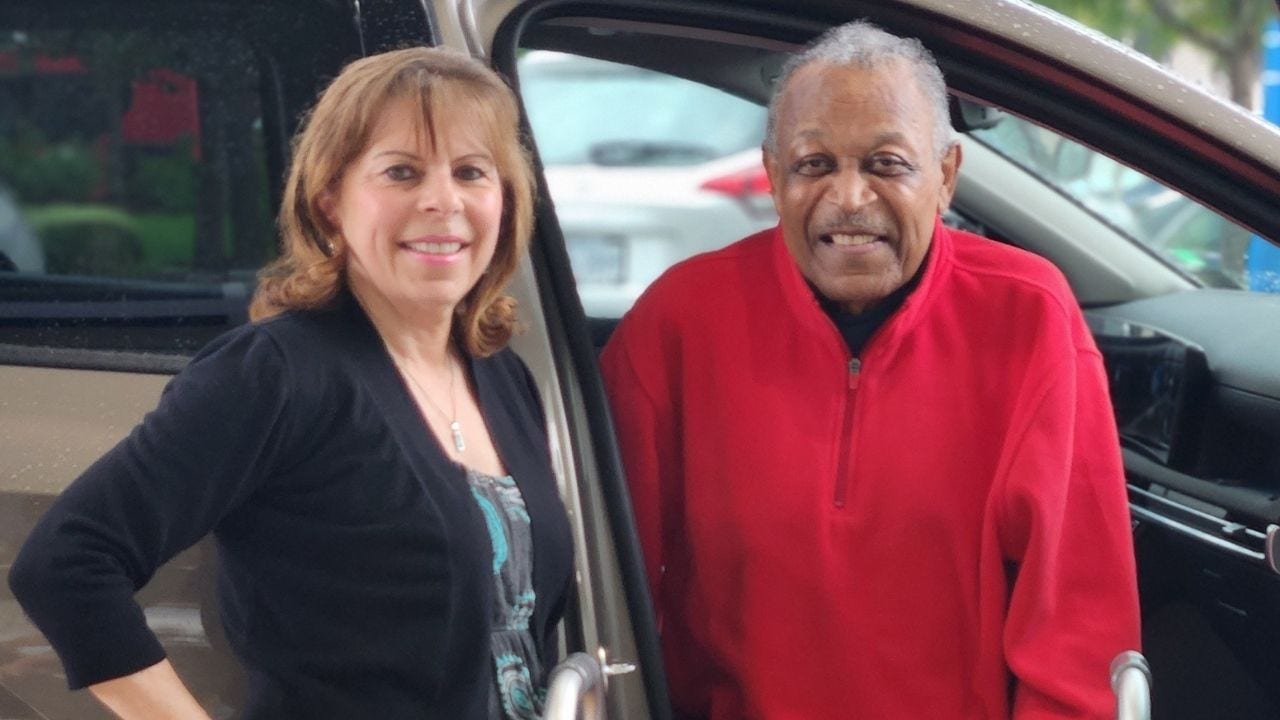
Darlene Parker's cancer journey became a lifetime of volunteer service, activism, and advocacy.
When Darlene Parker was diagnosed with breast cancer in 1977, at the age of 23, she was already aware of the toll cancer can take. Just five years earlier, she had lost her mother to lung cancer.
“There was a time I wondered if I would reach the age of 40,” Darlene said.
She underwent a mastectomy and reconstructive surgery, and today is one of the more than 4 million breast cancer survivors in the United States.
Darlene’s gratitude for surviving breast cancer has inspired a lifetime of service and advocacy for people with cancer. Over decades as a volunteer for the American Cancer Society and the American Cancer Society Cancer Action Network (ACS CAN), Darlene has provided rides to treatment, recruited volunteers, and advocated for policies that improve the lives of people affected by cancer.
Launching a life of service
Darlene’s road to service for people with cancer was paved by a volunteer with the American Cancer Society.
“I am grateful to the American Cancer Society Reach To Recovery (now ACS CARES®) volunteer who spent time with me soon after my mastectomy,” she said.
Since Darlene’s Reach To Recovery mentor was almost 20 years older than her, she recognized the need for young breast cancer survivors to have peers to support each other and share their unique experiences.
Today, about 1 in 10 women diagnosed with breast cancer are younger than 45, and while breast cancer incidence rates have increased by 1% per year, the rise has been a little faster in women younger than 50 (1.4%).
In 1981, at the age of 27, Darlene became a Reach To Recovery volunteer, visiting breast cancer patients in the hospital, offering support based on her own experience, and helping them with doctor-approved arm exercises after surgery. She also volunteered to raise breast cancer awareness and promote early detection by speaking about her journey at women’s groups, churches, and workplaces.
During the 1990s, while volunteering at a public access TV station and anchoring a weekly newscast, Darlene wrote, produced, and appeared in a breast cancer public service announcement that aired on television stations in the Washington, D.C. area.
That same decade, Darlene achieved the milestone she once wasn't sure she would ever see: her 40th birthday.
“The best was yet to come,” she said. “At the age of 45, I gave birth to my one and only child, a son.”
More than ‘a boo-boo’
Her son, she said, may have saved her life.
In 2003, when he was about a month shy of 4 years old, her son pointed to Darlene’s arm and said: “You have a boo-boo.”
The "boo-boo" was a spot on the skin of her upper left arm in a place she would not have noticed otherwise. Darlene said it looked as if someone tapped a small dot on her arm with a black permanent marker.
As a cancer survivor, Darlene knew exactly what to do.
"I knew I needed to be very careful about anything like that," she said. "So that's what got me to the dermatologist quickly. They did a biopsy and determined it was melanoma."
Doctors removed the spot and took a wide margin of tissue around it. Tests showed the melanoma was in situ or stage 0, meaning it had not grown beyond the outermost layer of skin. Darlene needed no additional treatment.
Darlene sees a dermatologist annually and is passionate about spreading awareness of skin cancer prevention and early detection.
“I see a dermatologist regularly, and I’m faithful about that," she said. "That's one thing that I preach when I do give my speeches. I urge people to stay out of the sun, use sunscreen, and see a dermatologist. That's something a lot of people don't do. And if you do see a mole that has changed or a new mole that's suspicious, please get it looked at ASAP."
On the road and on the air
Darlene always imagined that when she retired, she would devote herself even more to the cancer mission. In 2024, after wrapping up a career in TV closed captioning, she did just that.
In addition to being selected as a Faces of Hope recipient for that year’s American Cancer Society Making Strides Against Breast Cancer® walk in Washington, D.C., Darlene became a volunteer driver for the American Cancer Society Road To Recovery® program, which provides free patient transportation to and from cancer-related medical appointments.
Since then, she has provided more than 150 rides to people with cancer in the Northern Virginia area where she lives. She’s also participated in numerous TV interviews about Road To Recovery and was featured in Sinclair Cares: Help Drive Out Cancer, a national TV campaign.
Darlene speaks about Road To Recovery to service clubs and organizations, encouraging others to volunteer ─ and many have since become drivers. Her dedication to the program has earned her the role of Road To Recovery Recruitment Champion.
Becoming an advocate for change
In 2025, she also became active with ACS CAN, advocating in Virginia and Maryland and on Capitol Hill to support government policies aimed at reducing the burden of cancer.
As a volunteer, Darlene advocates for expanding health care coverage, access to cancer screening tests, cancer research funding, paid family medical leave, and practical medical debt collection policies, to protecting smoke-free policies. She is proud to wear the signature blue ACS CAN logo shirt when she attends events and legislative hearings.
“It’s powerful to show up with other ACS CAN volunteers in a sea of blue shirts to make our influence known,” she said.
Darlene’s tireless nature goes beyond volunteering with the American Cancer Society. She also teaches a dance cardio class three times a week, chairs her church’s outreach committee, and enjoys traveling with her husband, attending concerts, and spending time with family and friends.
Nearly five decades after her breast cancer diagnosis, Darlene is no longer wondering what the future holds. Instead, she is helping countless others reach their future, turning the years she feared she might never have into a lifetime of service, advocacy, and hope.

Reviewed by the American Cancer Society communications team.