Your gift is 100% tax deductible.
Breast Cancer
If you have breast cancer or are close to someone who does, knowing what to expect might be helpful. Here you can find out more about breast cancer, including risk factors, symptoms, how it is found, and how tumors are diagnosed and treated.
For information on breast cancer in men, see Breast Cancer in Men.
About breast cancer
Get basic information about breast cancer, such as the different types, where they start, important statistics, and current research topics.
What is breast cancer?
Breast cancer is a type of cancer that starts in the breast. It can start in one or both breasts. Breast cancer occurs mainly in women, but men can get breast cancer, too.
Cancer starts when cells begin to grow out of control. These cells usually form a tumor that can often be seen on a mammogram (x-ray of the breast) or felt as a lump. If the cancer isn’t treated, the cancer cells can grow into (invade) nearby areas or spread (metastasize) to other parts of the body.
To learn more about how cancers start and spread, see What Is Cancer?
Not all breast lumps are cancer
Most breast lumps are benign (not cancer). While benign breast tumors are abnormal growths, they do not spread outside the breast. They are not life-threatening, but some types of benign breast lumps can increase the risk of getting breast cancer.
Any breast lump or change needs to be checked by a healthcare professional to find out whether it is benign or malignant (cancer) and whether it might affect your future cancer risk.
The breasts
The left and right breasts are organs that sit on top of the upper ribs and chest muscles. They’re made up mainly of milk glands (lobules), ducts, fatty tissue, and connective tissue.
In women, the breasts can make milk to feed newborns and infants. The size of the breasts is determined mainly by the amount of fatty tissue in them.
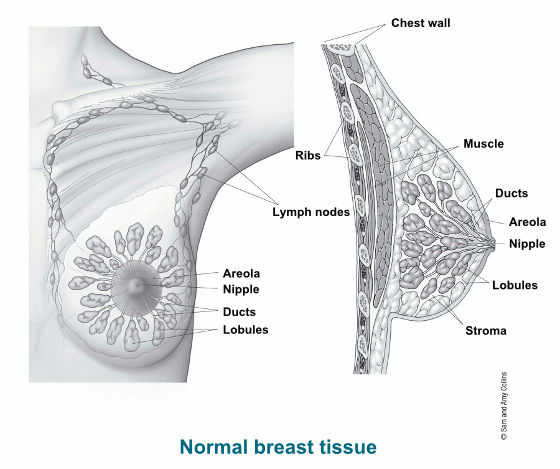
The breast has different parts:
- Lobules are the glands that make breast milk. Cancers that start here are called lobular cancers.
- Ducts are tiny tubes that carry the milk from the lobules to the nipple. The ducts are the most common place for breast cancer to start. Cancers that start here are called ductal cancers.
- Nipples are the openings in the skin of the breasts where the ducts come together so that milk can leave the breasts. Each nipple is surrounded by slightly darker, thicker skin called the areola. A less common type of breast cancer called Paget disease of the breast can start in the nipple.
- Fat and connective tissue (stroma) surround the ducts and lobules and help keep them in place. A less common type of breast cancer called phyllodes tumor can start in the stroma.
- Blood vessels and lymph vessels are also found in each breast. Angiosarcoma is a less common type of breast cancer that can start in the lining of these vessels. The lymph system is described below.
A small number of cancers start in other tissues in the breast. These include soft tissue sarcomas and lymphomas, which can start in many parts of the body and are not really thought of as breast cancers.
How breast cancer spreads
Breast cancer can spread (metastasize) when the cancer cells get into the blood or lymph system and then are carried to other parts of the body.
The lymph system or lymphatic system is a part of your body's immune system. It is a network of lymph nodes (small, bean-sized collections of immune cells), lymph vessels, and organs that work together to collect and carry clear lymph fluid and immune cells through the body tissues and back to the blood.
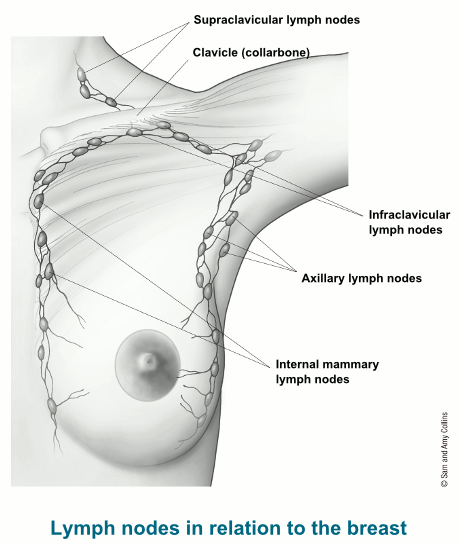
Breast cancer cells can enter lymph vessels and start to grow in nearby lymph nodes. These include:
- Axillary lymph nodes in the armpit. This is the most common site of breast cancer spread to the lymph nodes.
- Internal mammary lymph nodes inside the chest near the breastbone
- Supraclavicular lymph nodes above the collarbone (clavicle)
- Infraclavicular lymph nodes below the collarbone
If breast cancer cells have spread to your lymph nodes, there is a higher chance that there could be areas of cancer spread in other parts of your body, called metastases. Still, not all people with cancer cells in their lymph nodes develop metastases, and some people with no cancer cells in their lymph nodes might develop metastases later.
Quick guides
More resources


- Written by
- References

Developed by the American Cancer Society medical and editorial content team with medical review and contribution by the American Society of Clinical Oncology (ASCO).
Henry NL, Shah PD, Haider I, Freer PE, Jagsi R, Sabel MS. Chapter 88: Cancer of the Breast. In: Niederhuber JE, Armitage JO, Doroshow JH, Kastan MB, Tepper JE, eds. Abeloff’s Clinical Oncology. 6th ed. Philadelphia, Pa: Elsevier; 2020.
Jagsi R, King TA, Lehman C, Morrow M, Harris JR, Burstein HJ. Chapter 79: Malignant Tumors of the Breast. In: DeVita VT, Lawrence TS, Lawrence TS, Rosenberg SA, eds. DeVita, Hellman, and Rosenberg’s Cancer: Principles and Practice of Oncology. 11th ed. Philadelphia, Pa: Lippincott Williams & Wilkins; 2019.
Laronga C. Patient education: Breast cancer guide to diagnosis and treatment (Beyond the Basics). UpToDate. 2026. Accessed at https://www.uptodate.com/contents/breast-cancer-guide-to-diagnosis-and-treatment-beyond-the-basics on March 31, 2026.
National Cancer Institute. What Is Breast Cancer? 2025. Accessed at https://www.cancer.gov/types/breast/what-is-breast-cancer on March 31, 2026.
Last Revised: June 24, 2026
American Cancer Society medical information is copyrighted material. For reprint requests, please see our Content Usage Policy.