
What to Expect During a Skin Cancer Exam
You may be diligent about getting an annual physical, visiting the dentist, and having your eyes checked. But what about your skin?
Prevention is your best defense against skin cancer, by far the most common cancer in the United States. Doing regular skin checks on yourself and getting regular skin exams from a trained healthcare professional can help identify skin problems that may or may not be cancer. These checks are recommended to help catch skin cancer early, when it is often easier to treat.
“Combined with skin self-exams, routine skin exams by health professionals for people at high risk for melanoma and other skin cancers can help save lives,” said Susan Swetter, MD, an American Society of Clinical Oncology (ASCO) expert and Professor of Dermatology at Stanford Medicine and Cancer Institute.
Who should get a skin cancer exam?
Anyone can get skin cancer. While melanoma accounts for only about 1% of skin cancers, it is more serious because it’s more likely to grow and spread. The most common skin cancers are basal cell cancer and squamous cell cancer. They are very common but also usually very treatable.
There are no formal guidelines for skin cancer screening. But most experts agree that everyone should check their own skin regularly. Once a month is generally recommended.
No matter your level of risk, it’s important to be familiar with your own skin, looking at the patterns of moles, freckles, and blemishes. Schedule a skin check with a health professional if you notice anything new.
“Regular skin self-exams can promote the early detection of melanoma and other skin cancers. If you know what your risk is and what to look for, you’ll know when to see a doctor,” said Dr. Swetter.
Routine skin checks by a healthcare professional are especially important for people at high risk of developing skin cancer.
Skin cancer risk factors include:
- A personal or strong family history of skin cancer
- Light skin or freckles
- Naturally blond or red hair
- Lots of moles, including larger moles on the body
- A history of severe, blistering sunburns
- A history of using tanning beds
- Spending a lot of time outdoors when you have a tendency to sunburn
- A weakened immune system
Who can perform a skin cancer exam?
People at higher risk for skin cancer are typically referred to a dermatologist for a skin check. A dermatologist is a doctor who specializes in treating the skin. Dermatologists have the most training and the latest tools for finding and diagnosing skin conditions.
Other healthcare professionals may do skin exams as part of routine checkups. If your primary doctor finds any suspicious areas, they can refer you to a dermatologist.
How to prepare for a skin cancer exam
Follow these tips to give your doctor the best view of your skin from head to toe.
- Check yourself first. During your skin self-exam, note any new moles, freckles, or other spots you haven’t seen before. For spots you’ve noticed previously, check if they have recently changed in color or size so you can point them out to the doctor. Circle the spots with a pen or take a photo with your phone to help you remember.
- Skip the makeup. Wearing little or no makeup can help make sure unusual spots or changes aren’t covered up.
- Wear your hair down. Keeping your hair loose allows your scalp and ears to be more visible.
- Remove nail polish. Your nail beds will be checked for signs of skin cancer. Melanoma is the skin cancer most often linked to changes under the nails. Tell your doctor if you notice any unusual spots, color, or shape changes in or under your fingernails or toenails.
What happens during a skin cancer exam?
You will undress but can usually leave your undergarments on. Then you’ll change into a gown that typically opens in the back.
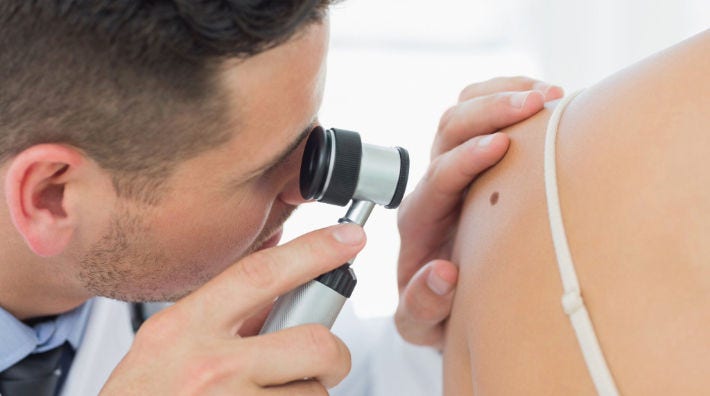
You will sit or lie on a table while the doctor performs the exam. They will look closely at your skin and may use a special lighted magnifying tool (dermatoscope).
The doctor will pay special attention to:
- Body parts that are more prone to sun damage, including the face, ears, neck, back, arms, tops of the hands, and backs of the legs.
- Body parts that are often overlooked or hard to see, such as the scalp, between the toes, and the soles of the feet.
- Any areas of concern from your self skin-exam.
It’s best to expose as much skin as possible for a skin exam. Still, you should expect your comfort and privacy to be respected. For example, your doctor can uncover and examine one area at a time, leaving the rest of the body covered. They should explain each step and ask permission before looking at sensitive areas like the genitals, buttocks, or breasts.
“Ultraviolet (UV) radiation from the sun is a major cause of most skin cancer, so we spend the most time on areas of the skin that get the most sun,” said Dr. Swetter. “It’s also important to take a quick look at other areas, like the groin and underarms. It’s rare to find skin cancer where the sun doesn’t shine, but it can happen.”
Most skin changes are benign (not cancerous) and rarely turn into cancers. But some areas can show signs of pre-cancer when examined. Left untreated, pre-cancers can turn into cancer. Pre-cancers can be treated during or right after the skin exam. One method is freezing the area with liquid nitrogen. If cancer is suspected, a biopsy may be done during the skin exam or scheduled for a later date.
How long does a skin exam take?
Full-body skin exams are typically brief, painless, and non-invasive. If areas of concern require a closer look, the exam may take longer.
“A thorough skin check by an experienced dermatologist takes less than 5 minutes,” said Dr. Swetter. “With today’s technology, dermatologists can often immediately tell a concerning skin lesion from a harmless one.”
What happens after a skin exam?
If nothing concerning is found during a skin exam, ask your doctor how long you should wait before your next exam. While once a year is often recommended, people with skin cancer risk factors, pre-cancers, or a history of skin cancer may need exams more frequently.
If your dermatologist finds something of concern, the exam findings will be documented, possibly with photographs, and a follow-up visit will be scheduled. Pre-cancers treated during or right after a skin exam may need watchful waiting with regular monitoring. “Most melanomas grow and change over time. If the spot is stable, it’s less likely to be skin cancer,” said Dr. Swetter.
Let your doctor know if you notice any changes in your skin during your monthly self exams.
“Skin cancer that is caught before it can spread usually requires less treatment, with fewer side effects. Most important, early detection means a better chance of survival,” said Dr. Swetter.
Learn more about skin cancer from the American Cancer Society:
- How to Do a Skin Self-Exam
- Skin Cancer Image Gallery
- Tests and Procedures to Find and Treat Skin Cancer
- Be Safe in the Sun: Sun, UV Radiation, Tanning, and Cancer Risk
- Basal Cell Carcinoma
- Squamous Cell Carcinoma of the Skin
- Melanoma Skin Cancer
Dr. Swetter is an ASCO member.
- Written by

Written by the American Society of Clinical Oncology (ASCO) with medical and editorial review by the American Cancer Society content team.