Your gift is 100% tax deductible.
Oral Cavity (Mouth) and Oropharyngeal (Throat) Cancer
Oral cavity and oropharyngeal cancers start in the mouth or throat. If you have one of these cancers or are close to someone who does, knowing what to expect can help. Here you can find out about oral cavity and oropharyngeal cancers, including risk factors, symptoms, how these cancers are found, and how they're treated.
About oral cavity and oropharyngeal cancer
Oral cavity cancer starts in the mouth. You might also hear it called oral cancer.
Oropharyngeal cancer starts in the middle section of the throat, just behind the oral cavity in the part of the throat that can be seen when the mouth is open.
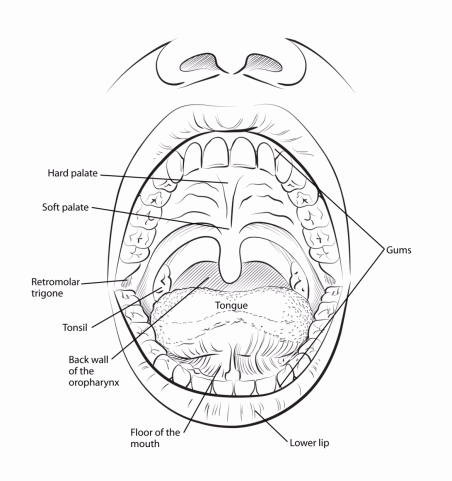
The oral cavity (mouth) and oropharynx (throat)
The oral cavity includes the lips, the inside lining of the lips and cheeks (buccal mucosa), the bony structure on the upper and lower jaw that holds the teeth (alveolar ridge), the gums, the front two-thirds of the tongue, the floor of the mouth below the tongue, the bony roof of the mouth (hard palate), and the area behind the wisdom teeth (retromolar trigone).
The oropharynx is the middle part of the throat just behind the oral cavity. It can be seen when your mouth is wide open. It includes the back third of the tongue (base of the tongue), the back part of the roof of the mouth (soft palate), the tonsils, and the side and back walls of the throat (posterior pharyngeal wall).
Your oral cavity and oropharynx help you breathe, talk, eat, chew, and swallow. Minor salivary glands all over the oral cavity and oropharynx make saliva (spit) that keeps your mouth and throat moist and helps you digest food.
Ask your doctor to explain or show you where your cancer is. Explore the 3D interactive model here to learn more.
Types of oral cavity and oropharyngeal cancers
Your oral cavity and oropharynx are made up of many parts, and each of these parts is made up of many types of cells. This is important because different cancers can start in each of these types of cells.
Along with the cancer's exact location in your oral cavity or oropharynx, the type of cells your cancer started in can help determine your treatment options and prognosis (outlook).
Almost all cancers in the oral cavity and oropharynx are squamous cell carcinomas, also called squamous cell cancers. These cancers start in squamous cells, which are flat, thin cells that form the lining of the mouth and throat.
- Squamous cell carcinoma in situ: The earliest form of squamous cell cancer is called carcinoma in situ. This means that the cancer cells are only in the epithelium, the top layer of cells lining the oral cavity and oropharynx.
- Invasive squamous cell carcinoma: The cancer is referred to as invasive if the cancer cells have grown past the epithelium and into the deeper layers of the oral cavity or oropharynx.
HPV-related cancers
In the United States, most squamous cell cancers of the oropharynx are caused by infection with certain high-risk types of the human papillomavirus (HPV). This is called HPV-positive cancer.
HPV is rarely associated with oral cavity cancer.
HPV-positive cancers are seen more often in young people with no history of tobacco or alcohol use. These cancers tend to have a better outcome (prognosis) than HPV-negative cancers (squamous cell cancers not related to an HPV infection). This is most likely because HPV-positive cancers shrink more when treated with chemotherapy and radiation. Learn more in Causes, Risk Factors, and Prevention for Oral Cavity and Oropharyngeal Cancers.
Verrucous carcinoma
This is a rare type of squamous cell cancer most often found in the gums and cheeks. It is low-grade (slow growing) and hardly ever spreads to other parts of the body.
These cancers can start in the glands in the lining of the mouth and throat. There are many types of minor salivary gland cancers, including adenoid cystic carcinoma, mucoepidermoid carcinoma, and polymorphous low-grade adenocarcinoma. See Salivary Gland Cancer to learn more about these, as well as benign salivary gland tumors.
The tonsils and base of the tongue contain immune system (lymphoid) tissue, where cancers called lymphomas can start. For more information about these cancers, see Non-Hodgkin Lymphoma (Adults) and Lymphoma in Children.
Leukoplakia and erythroplakia (possible pre-cancer conditions)
Leukoplakia and erythroplakia are terms used to describe certain types of tissue changes that can be seen in the mouth or throat:
- Leukoplakia is a white or gray area that does not come off when scraped.
- Erythroplakia is a flat or slightly raised red area that often bleeds easily when scraped.
- Erythroleukoplakia is a patch with both red and white areas.
Your dentist or dental hygienist may be the first person to find these white or red patches. They might be cancer, a pre-cancer condition called dysplasia, or just a harmless change.
Smoking and chewing tobacco are the most common causes of leukoplakia and erythroplakia. Poorly fitting dentures that rub against the tongue or the inside of the cheeks can also cause these changes. Sometimes, there is no clear cause.
- Leukoplakia: Most cases of leukoplakia do not turn into cancer. Some leukoplakias are cancer or have pre-cancer changes that can turn into cancer if not properly treated.
- Erythroplakia and erythroleukoplakia: These are less common but usually more serious. Compared to white lesions or leukoplakia, it is more common for red lesions to be cancer or develop into cancer later.
Most oral cancers do not develop from pre-existing leukoplakia or erythroplakia lesions, but a biopsy is the only way to know for certain if one of these lesions has cancer cells or dysplastic (pre-cancer) cells. (See dysplasia, below). Other tests might be done first to help determine if a biopsy is needed or to choose the best area to sample for a biopsy.
Dysplasia is a term used to describe the degree to which cells look abnormal under a microscope. Dysplasia can be categorized as mild, moderate, or severe. Knowing the degree of dysplasia helps predict how likely it is that a lesion will turn into cancer or go away on its own.
For example, severe dysplasia is more likely than mild dysplasia to become cancer. Dysplasia sometimes goes away if the cause is removed, such as poorly fitting dentures.
Benign tumors (not cancer)
Many types of benign tumors and tumor-like changes can start in the mouth or throat, including:
- Peripheral giant cell granuloma
- Fibroma
- Granular cell tumor
- Schwannoma
- Neurofibroma
- Pyogenic granuloma
- Oral hemangioma
These non-cancer tumors start from different kinds of cells and have many causes. Some of them may cause problems, but they typically aren’t life-threatening. The usual treatment for these types of tumors is surgery to remove them completely since they are unlikely to recur (come back).
Quick Guide
- Written by
- References

Developed by the American Cancer Society medical and editorial content team with medical review and contribution by the American Society of Clinical Oncology (ASCO).
American Joint Committee on Cancer. Lip and Oral Cavity. In: AJCC Cancer Staging Manual. 8th ed. New York, NY: Springer; 2017:79.
American Joint Committee on Cancer. Oropharynx (p16-) and Hypopharynx. In: AJCC Cancer Staging Manual. 8th ed. New York, NY: Springer; 2017:123.
Leeman JE, Katabi N, Wong RJ, Lee NY, Romesser PB. Ch. 65 - Cancer of the Head and Neck. In: Niederhuber JE, Armitage JO, Doroshow JH, Kastan MB, Tepper JE, eds. Abeloff’s Clinical Oncology. 6th ed. Philadelphia, Pa. Elsevier; 2020.
Mendenhall WM, Dziegielewski PT, Pfister DG. Chapter 45- Cancer of the Head and Neck. In: DeVita VT, Lawrence TS, Rosenberg SA, eds. DeVita, Hellman, and Rosenberg’s Cancer: Principles and Practice of Oncology. 12th ed. Philadelphia, Pa: Lippincott Williams & Wilkins; 2023.
National Cancer Institute. Physician Data Query (PDQ). Lip and Oral Cavity Cancer Treatment. May 14, 2025. Accessed at https://www.cancer.gov/types/head-and-neck/hp/adult/lip-mouth-treatment-pdq on January 29, 2026.
Woo SB. Oral epithelial dysplasia and premalignancy. Head Neck Pathol. 2019;13(3):423-439.
Last Revised: March 23, 2026
American Cancer Society medical information is copyrighted material. For reprint requests, please see our Content Usage Policy.