Your gift is 100% tax deductible.
Hepatoblastoma
Hepatoblastoma is the most common liver cancer in children. While rare, it is most commonly diagnosed in young children and infants, often before age 5.
On this page
- About hepatoblastoma
- How common is hepatoblastoma? Who gets it?
- Risk factors for hepatoblastoma
- Signs and symptoms of hepatoblastoma
- How is hepatoblastoma diagnosed?
- Hepatoblastoma types
- Hepatoblastoma staging and risk groups
- Treatment of hepatoblastoma
- How well do treatments for hepatoblastoma work?
- Life after treatment for hepatoblastoma
- Key points to remember
- Tools & resources
- News & stories
About hepatoblastoma
Hepatoblastoma is a type of liver cancer that mainly affects children. It is an embryonal tumor, meaning it grows from early forms of cells, specifically those involved in the development of the liver.
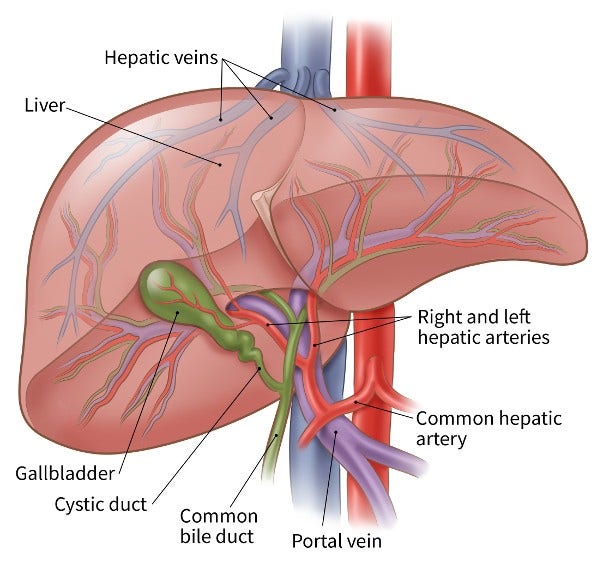
Understanding liver tumors
Other liver cancers in children include hepatocellular carcinoma (HCC), fibrolamellar carcinoma, undifferentiated embryonal sarcoma, biliary rhabdomyosarcoma, rhabdoid tumors, and vascular liver tumors.
Some of these tumors are more common in adults. See What Is Liver Cancer? to learn more about them.
How common is hepatoblastoma? Who gets it?
Hepatoblastoma is a rare tumor, but the incidence has been slowly increasing over time.
About 150 children are diagnosed with liver tumors each year in the United States. About 2 out of 3 liver tumors in young children are hepatoblastoma. It is the most common liver cancer in children.
Hepatoblastoma is most common in children under age 5 and is most often diagnosed before age 2. Hepatoblastoma in adults is very rare. It is slightly more common in males.
Risk factors for hepatoblastoma
Risk factors for cancer include genetic factors and environmental factors.
Changes in the genes inside our cells can increase the risk of certain health problems, such as some types of cancer. These changes can be inherited from a parent or sometimes can happen very early in development before a child is born.
People with certain family cancer syndromes have a higher risk of developing hepatoblastoma. The syndromes most strongly linked to hepatoblastoma are:
- Beckwith-Wiedemann syndrome
- Familial adenomatous polyposis
- Simpson-Golabi-Behmel syndrome
- Trisomy 18 (Edwards syndrome)
Other conditions have also been linked to hepatoblastoma, though the connection is not as strong:
- Neurofibromatosis type 1
- Prader-Willi syndrome
- Trisomy 13 (Patau syndrome)
- Trisomy 21 (Down syndrome)
- Aicardi syndrome
- Li-Fraumeni syndrome
- Goldenhar syndrome
- Glycogen storage diseases
- Sotos syndrome
- Noonan syndrome
In some of these conditions, screening for hepatoblastoma with blood or imaging tests may be recommended when children are young.
Factors outside our bodies can increase the risk of some types of cancer. Unlike many adult cancers, lifestyle-related risk factors, such as physical activity, diet, and the use of substances do not play a major role in pediatric cancers.
Hepatoblastoma is more common in children who:
- Were born early (premature)
- Had a low birth weight
- Have birth defects, such as heart, kidney, or bladder abnormalities
The reason for this is not entirely known.
Signs and symptoms of hepatoblastoma
Hepatoblastoma may not cause symptoms when it is diagnosed. It is often found as a mass in the belly without any other symptoms. In some cases, children may have general symptoms, such as:
- Belly pain
- Nausea
- Vomiting
- Swelling of the belly
Usually, hepatoblastoma does not affect healthy liver tissue, and the liver is able to function normally.
Rarely, when these tumors are very large, they can press on blood vessels or nerves nearby. Large hepatoblastoma tumors can also rupture and cause bleeding into the belly.
How is hepatoblastoma diagnosed?
Doctors can often tell that a child has a liver tumor based on imaging test results. While hepatoblastoma is the most common liver cancer in younger children, a biopsy or tissue sample is needed to confirm the diagnosis and to learn more about the tumor.
The tests used to diagnose hepatoblastoma are similar to the tests used in adults with liver cancer. For more information, see Diagnosing Liver Cancer.
Imaging tests use x-rays, sound waves, or magnetic fields to create pictures of the inside of the body. Imaging tests can be done for a few reasons, including:
- To help find out if a suspicious area might be cancer
- To learn how far cancer has spread
- To help determine if treatment is working
A liver mass might first be found on an ultrasound, but often more detailed imaging, such as a CT scan or an MRI is needed. Other imaging tests, such as a chest x-ray or CT scan, might be used to look for cancer spread in the lungs or other places.
Blood tests can look for AFP (alpha-fetoprotein), a protein that many hepatoblastoma cells make. The normal level of AFP can change with a child’s age. But if a child has a liver mass and an elevated level of AFP for their age, this can be a sign of hepatoblastoma.
If the AFP level is normal, the tumor might be a different type of liver cancer. A biopsy is often still needed to be sure.
In rare cases, hepatoblastoma tumors can make a protein called hCG (human chorionic gonadotropin), which can also be measured in the blood. This protein can cause hair growth, usually seen in puberty, in much younger children.
Your care team may also do other blood tests to check how well the liver and kidneys are working. They might also check blood cell counts or run clotting tests before a biopsy or surgery.
To confirm a diagnosis of hepatoblastoma, a biopsy is usually done. In this procedure, a small sample of tissue is removed and looked at under a microscope. In some cases, if the tumor is smaller and far enough away from major blood vessels, the entire tumor may be removed instead of taking only a sample.
This procedure is done under anesthesia, while the child is asleep.
Hepatoblastoma types
There are different types of hepatoblastoma, which are diagnosed based on how they look under the microscope.
Most hepatoblastomas grow from the cells that make up the liver. These are called epithelial hepatoblastomas. There are two main types of epithelial hepatoblastoma:
- Fetal hepatoblastoma
- Embryonal hepatoblastoma
Some hepatoblastomas grow from the connective tissues in the liver. These are called mesenchymal hepatoblastomas.
Each of these types of hepatoblastoma can be further defined by different factors, such as how the cells look under the microscope. These details can affect the outlook for the cancer and how it is treated.
Other hepatoblastoma types are rare and might include several types of immature cells.
The type of hepatoblastoma can be important for choosing treatment. Certain types of hepatoblastoma may have better outcomes than others. For example, well-differentiated fetal hepatoblastomas tend to respond very well to surgery.
Hepatoblastoma staging and risk groups
After someone is diagnosed with hepatoblastoma, doctors will try to figure out how much of the liver is involved and whether the cancer has spread. This process is called staging.
The stage describes how much cancer is in the body. It helps determine how serious the cancer is and how best to treat it. Doctors also use the stage when talking about survival statistics.
A risk group is a way to group people based on how much treatment may be needed and how likely the cancer is to come back or grow after treatment.
Hepatoblastoma staging can be described using imaging test results to define a PRETEXT or POSTTEXT group.
A hepatoblastoma tumor is given a group classification based on imaging tests either at the time of diagnosis (PRETEXT) or after initial chemotherapy (POSTTEXT).
The 4 tumor groups are based on how many of the liver’s 4 sections are involved:
- Group I: The tumor is in 1 section.
- Group II: The tumor is in 2 sections, with 2 neighboring sections free of tumor.
- Group III: The tumor is in 3 sections, with no 2 neighboring sections free of tumor.
- Group IV: The tumor is in all 4 sections.
If you see letters after the group classification
Sometimes letters, called annotation factors, appear after the group classification. These letters show where a tumor is located or has spread.
- V: The tumor involves the hepatic vein or vena cava, which drains blood from the liver back to the heart.
- P: The tumor involves the portal vein, which brings blood to the liver.
- E: The tumor extends outside the liver.
- M: The tumor has spread to distant areas (such as the lungs).
- C: The tumor involves the caudate lobe (underside) of the liver.
- F: Multiple tumors are seen in the liver.
- N: The tumor extends to the lymph nodes.
- R: The tumor ruptured before diagnosis.
There are a few different risk grouping systems for hepatoblastoma around the world. Most recently, the Children’s Hepatic tumors International Collaboration (CHIC) introduced a standardized risk stratification tool based on factors such as:
- The PRETEXT stage
- Annotation factors (letters above)
- How old the child is when the tumor is diagnosed
- The AFP level
Based on this information, hepatoblastoma can be divided into 4 risk groups:
- Very low risk
- Low risk
- Intermediate risk
- High risk
Risk groups are used by the cancer care team to understand the outlook and decide which treatment options are best.
Treatment of hepatoblastoma
Most children with hepatoblastoma are treated with a combination of surgery and chemotherapy.
Surgery is the preferred treatment for hepatoblastoma when the tumor can be removed safely at the time of diagnosis.
If the tumor cannot be removed safely right away, chemotherapy might be given first to shrink the tumor. Surgery may then be done later to remove the tumor.
A liver transplant might also be an option when the tumor is large and cannot be removed by taking out only part of the liver. This might be considered if the cancer is limited to the liver or if any cancer that has spread outside the liver has been treated completely.
For more information, see Surgery for Liver Cancer.
In most cases, chemotherapy in combination with surgery is needed to prevent cancer from coming back (recurrence). However, in the case of well-differentiated fetal hepatoblastoma, surgery to remove the tumor may be all that is needed.
Chemotherapy (chemo) is the use of drugs to treat cancer. Chemo drugs used to treat hepatoblastoma can include:
- 5-Fluorouracil (5-FU)
- Carboplatin
- Cisplatin
- Doxorubicin
- Etoposide
- Irinotecan
- Vincristine
Chemo drugs can be used alone or in combination, depending on the tumor and its risk of coming back after treatment.
For example, a combination called C5VD may be used in children with intermediate-risk hepatoblastoma. C5VD combines cisplatin, 5-fluorouracil, vincristine, and doxorubicin.
Chemotherapy might be used before surgery, after surgery, or both.
Side effects of chemotherapy
Chemo drugs can cause side effects. These depend on the type and dose of drugs given, and the length of treatment. Common side effects include:
- Nausea and vomiting
- Loss of appetite
- Diarrhea
- Hair loss
- Mouth sores
Chemo can also affect the blood-forming cells of the bone marrow, which can lead to:
- Increased chance of infections (from low white blood cell counts, also called leukopenia)
- Easy bruising or bleeding (from low blood platelet counts, also called thrombocytopenia)
- Fatigue (from low red blood cell counts and other reasons, also called anemia)
During treatment, tell your cancer care team about any side effects your child is having. There are often ways to shorten or lessen side effects. For example, growth factors may be given after chemotherapy to help the white blood cell count improve sooner. Certain medicines for nausea and vomiting can prevent or reduce these side effects.
These side effects often go away after treatment is finished. But some chemo drugs may have long-term or even permanent side effects:
- Cisplatin can cause kidney damage. To help prevent this, doctors give lots of IV fluid before and after this drug is given.
- Cisplatin, carboplatin, and vincristine can cause nerve damage (neuropathy). This can lead to problems with numbness, tingling, or even pain in the hands and feet.
- Cisplatin can damage the nerves in the ear, which may lead to hearing loss. To help protect against this, a drug called sodium thiosulfate (STS) is sometimes given along with cisplatin.
- Doxorubicin can cause damage to the heart. To help protect against this, a drug called dexrazoxane is often given. The cancer care team will monitor heart function during and after treatment, and the total dose of this drug may be limited to reduce this risk.
Other drugs can have other side effects, so ask about what side effects to expect from the treatments your child will receive.
The cancer care team will watch closely for side effects, treat them, and adjust chemo doses if needed.
Radiation therapy uses high-energy rays to kill cancer cells.
Radiation is not often used to treat hepatoblastoma, but it might be used in specific circumstances, such as if a tumor cannot be removed completely with surgery.
For children with tumors that cannot be removed with surgery and have not responded well to other treatments, other procedures might be an option, including:
- Transarterial chemoembolization (TACE)
- Transarterial radioembolization (TARE)
In these procedures, radiation or chemotherapy is given at high doses directly to the tumor. This helps block the tumor’s blood supply and cause it to shrink. These procedures are done more commonly in adults but are being studied for use in children.
For more information, see Embolization Therapy for Liver Cancer.
How well do treatments for hepatoblastoma work?
Hepatoblastoma survival has improved with the use of chemotherapy and other treatments, such as liver transplant, when surgery cannot remove the tumor.
A relative survival rate compares people who have the same type and stage of hepatoblastoma to people in the overall population.
For example, if the 5-year relative survival rate for a specific type and stage of cancer is 90%, it means that, on average, people with that cancer are about 90% as likely to live for at least 5 years after being diagnosed, compared to people who don’t have that cancer. Of course, many children live much longer than 5 years after hepatoblastoma treatment.
Relative survival rates differ based on the size and location of the tumor when it is diagnosed.
For children with hepatoblastoma localized to the liver, survival rates are above 80% to 90% with a combination of surgery (either removal of the tumor or liver transplantation if removal is not possible) and chemotherapy.
For children with metastatic hepatoblastoma, survival rates are lower. However, outcomes are better with recent advances in treatment.
Life after treatment for hepatoblastoma
After treatment, doctors will want to schedule regular follow-up exams to make sure the tumor has not come back and to check for any new symptoms or complications from the tumor and its treatment. At first, these visits may be more frequent, and over time they will be less often.
These visits will include talking about any new symptoms and might include imaging or blood tests.
If a liver transplant was done, following up with a hepatologist (a liver specialist) may be a part of post-cancer care, and your child may be on medications to lower the chance their body rejects the new liver. These medications may need to be monitored with special blood tests.
Side effects can happen long after treatment is finished. Certain chemo medicines can cause heart problems, kidney problems, or trouble hearing as a child gets older. Medicines can be used during treatment to lower these risks, but tests to monitor the heart, kidneys, or hearing may be recommended as the child gets older, depending on the treatment they received.
For more information, see Long-term and Late Effects of Childhood Cancer Treatment.
Key points to remember
- Hepatoblastoma is the most common liver cancer in children under age 5.
- Most hepatoblastoma tumors are treated with surgery and chemotherapy, if surgery can remove the tumor completely. In some cases, a liver transplant might be done for tumors when the liver can’t be saved.
- Written by
- References

Developed by the American Cancer Society medical and editorial content team with medical review and contribution by the American Society of Clinical Oncology (ASCO).
Cho SJ, Ranganathan S, Alaggio R, et al. Consensus classification of pediatric hepatocellular tumors: A report from the Children's Hepatic tumors International Collaboration (CHIC). Pediatr Blood Cancer. 2023;70(9):e30505.
Kahla JA, Siegel DA, Dai S, et al. Incidence and 5-year survival of children and adolescents with hepatoblastoma in the United States. Pediatr Blood Cancer. 2022;69(10):e29763.
Kastenberg ZJ, Vasudevan SA, Dolmadjian L, et al. Implementation of Comprehensive Surgical Guidelines for Hepatoblastoma: Analysis of the Children's Oncology Group AHEP0731 Phase III Trial. Ann Surg. Published online September 25, 2025.
Katzenstein HM, Malogolowkin MH, Krailo MD, et al. Doxorubicin in combination with cisplatin, 5-fluorouracil, and vincristine is feasible and effective in unresectable hepatoblastoma: A Children's Oncology Group study. Cancer. 2022;128(5):1057-1065.
Katzenstein HM, Langham MR, Malogolowkin MH, et al. Minimal adjuvant chemotherapy for children with hepatoblastoma resected at diagnosis (AHEP0731): a Children's Oncology Group, multicentre, phase 3 trial. Lancet Oncol. 2019;20(5):719-727.
Katzenstein HM, Furman WL, Malogolowkin MH, et al. Upfront window vincristine/irinotecan treatment of high-risk hepatoblastoma: A report from the Children's Oncology Group AHEP0731 study committee. Cancer. 2017;123(12):2360-2367.
Litten JB, Tomlinson GE. Liver tumors in children. Oncologist. 2008;13(7):812-820.
López-Terrada D, Alaggio R, de Dávila MT, et al. Towards an international pediatric liver tumor consensus classification: proceedings of the Los Angeles COG liver tumors symposium. Mod Pathol. 2014;27(3):472-491.
Malogolowkin M. Overview of hepatoblastoma. UpToDate. 2026. Accessed at https://www.uptodate.com/contents/overview-of-hepatoblastoma on May 1, 2026.
Meyers RL, Maibach R, Hiyama E, et al. Risk-stratified staging in paediatric hepatoblastoma: a unified analysis from the Children's Hepatic tumors International Collaboration. Lancet Oncol. 2017;18(1):122-131.
National Cancer Institute. Childhood Liver Cancer Treatment. Accessed at https://www.cancer.gov/types/liver/hp/child-liver-treatment-pdq on May 1, 2026.
O'Neill AF, Meyers RL, Katzenstein HM, et al. Children's Oncology Group's 2023 blueprint for research: Liver tumors. Pediatr Blood Cancer. 2023;70 Suppl 6(Suppl 6):e30576.
Pio L, O'Neill AF, Woodley H, et al. Hepatoblastoma. Nat Rev Dis Primers. 2025;11(1):36. Published 2025 May 22.
Ranganathan S, Lopez-Terrada D, Alaggio R. Hepatoblastoma and pediatric hepatocellular carcinoma: an update. Pediatr Dev Pathol. 2020;23(2):79-95.
Vasudevan SA, Meyers RL, Finegold MJ, et al. Outcomes of children with well-differentiated fetal hepatoblastoma treated with surgery only: Report from Children's Oncology Group Trial, AHEP0731. J Pediatr Surg. 2022;57(10):251-256.
Venkatramani R, Spector LG, Georgieff M, et al. Congenital abnormalities and hepatoblastoma: a report from the Children's Oncology Group (COG) and the Utah Population Database (UPDB). Am J Med Genet A. 2014;164A(9):2250-2255.
Zhou S, Malvar J, Chi YY, et al. Independent Assessment of the Children's Hepatic Tumors International Collaboration Risk Stratification for Hepatoblastoma and the Association of Tumor Histological Characteristics With Prognosis. JAMA Netw Open. 2022;5(2):e2148013. Published 2022 Feb 1.
Last Revised: July 22, 2026
American Cancer Society medical information is copyrighted material. For reprint requests, please see our Content Usage Policy.
This information is possible thanks to people like you.
We depend on donations to keep our cancer information available for the people who need it most.