
ACS-Backed Research Reveals Gap in Metastatic Lung Cancer Care
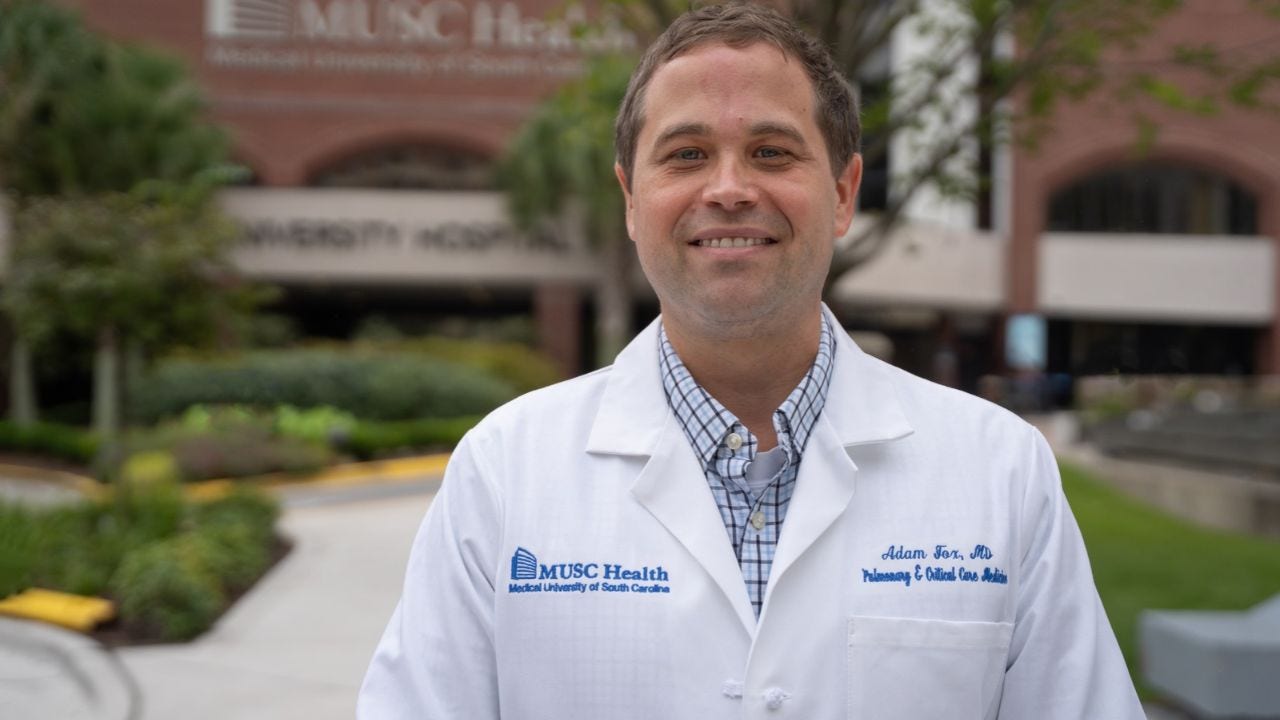
Dr. Adam Fox was surprised not just by what his research found, but what it didn't.
When Adam Fox, MD, and his colleagues at the Medical University of South Carolina (MUSC) Hollings Cancer Center began studying how advances in metastatic lung cancer treatment are changing treatment options, they stumbled upon an unexpected obstacle: finding patients.
It's not because there aren't enough people living with lung cancer. More than 680,000 lung cancer survivors are living in the United States and more than 229,000 new cases are expected to be diagnosed in 2026. But his team's early research revealed that a substantial number of people with metastatic lung cancer were not receiving treatment at all.
“We were stunned to see the initial results,” said Dr. Fox, a pulmonologist and assistant professor. Dr. Fox and colleague Gerard Silvestri, MD, also a pulmonologist at Hollings, led the study team with funding from the American Cancer Society National Lung Cancer Roundtable (NLCRT).
“Our immediate thought was, where are all of these patients?" Dr. Fox said. "It quickly dawned on us that many patients face very different circumstances that may affect access to care."
Who gets treated and who doesn't?
Unlike researchers who focus on discovering new drugs and therapies to treat cancer, Dr. Fox's area of study takes a different approach: How can the medical system ensure that patients benefit from the treatment advances that already exist?
His team learned of a troubling disconnect between scientific progress and real-world care delivery. His research suggests that the barriers to improved outcomes for people with cancer are not always about the science – they often are logistical, procedural, or geographical.
In one study, Dr. Fox and colleagues found that about half of adults 65 years or older diagnosed with metastatic non-small cell lung cancer never receive systemic treatment. Since treatment options have greatly expanded, Dr. Fox said the findings highlight the importance of understanding the factors that affect whether people who are candidates for systemic treatment receive it.
In another study, Dr. Fox examined the timeline from when a biopsy is done to when the tumor’s biomarker testing results are available. A biomarker is a genetic change or specific protein that helps doctors better understand what is driving the cancer’s growth. As a result, they can offer the most effective treatment options that target it. In many cases, turnaround time for biomarker results was up to four weeks. And in some cases, patients experienced treatment delays.
A focus on access and delivery
Making treatment decisions is influenced by many factors, Dr. Fox said, including cancer type and stage, overall health of the person being treated along with their preferences, family considerations, and goals of care. People with cancer may also face multiple barriers to care, including transportation challenges, treatment costs, limited access to specialists, or lack of social support.
But Dr. Fox found that some patients may be aware of systemic treatments like traditional chemotherapy and its often harsh side effects. But they may be unaware of newer ones, such as immunotherapy or targeted therapy, that have improved patient outcomes, often with different, less harsh side effects.
"Certainly, not all patients will choose to be treated," Dr. Fox said. "But making sure their decisions around treatment are informed by the current state of treatment or addressing other barriers that are identified could improve care for these patients.
“With new precision treatments for lung cancer, the potential benefits are increased compared to 20 years ago and the risks are somewhat less,” he said.
Funded by the American Cancer Society
The American Cancer Society has played a pivotal role in advancing Dr. Fox's research.
In July 2024, he was awarded an American Cancer Society Clinician Scientist Development Grant, which helps physician researchers build independent research programs while continuing to care for patients. The grant provides critical stability as Dr. Fox develops new approaches to improve lung cancer care and competes for future research funding.
"The ACS Career Development Award is really sustaining funding for my work to continue," Dr. Fox said. "I would not have been able to complete this work or continue down the line of research without it."
Dr. Fox's work in biomarker testing, care delivery, and a study examining treatment for metastatic lung cancer was funded through the NLCRT. Established in 2017, the NLCRT is a coalition of more than 170 organizations working to reduce the burden of lung cancer through prevention, early detection, and access to treatment.
"I cannot thank the American Cancer Society enough for supporting this research and my career," he said.

Reviewed by the American Cancer Society communications team.