How Walking Can Help Reduce Cancer-Related Fatigue
Exercising might seem like the last thing you want to do when you feel tired from cancer treatment. Over the years, research has demonstrated that regular physical activity can actually help reduce cancer-related fatigue. Now, a new study shows that movement as simple as taking a walk can help you get your energy back.
Cancer-related fatigue is one of the most common problems people face during and after cancer treatment. Everyday fatigue, experienced by people without cancer, often goes away with rest. For people with cancer-related fatigue, though, a feeling of total exhaustion can stick around no matter how much rest or sleep they get. Eventually, it can start interfering with their ability to function.
“Moments where patients are meant to be present in their daily lives, do what they love to do, and interact with others can be severely limited by cancer-related fatigue. Over time, if they can’t count on being able to participate in the things they love, that can really take a toll,” said Joshua Pritchett, MD, an American Society of Clinical Oncology (ASCO) expert and oncologist at the Mayo Clinic.
What causes cancer-related fatigue?
Most often, cancer-related fatigue is caused directly by the cancer itself. “When cancer is growing in your body, there’s a metabolic process happening that requires more energy,” said Dr. Pritchett. “Your body is already attending to the things that it needs to attend to. But now it also has a cancer that’s growing, and that draws away the energy you normally have as part of your reserve.”
Other factors can play a role, too. For example, if you’ve had cancer surgery, your body uses extra energy to help you recover. Chemotherapy and radiation therapy treatments can drain a person’s energy. So can side effects like pain and a low red blood cell count (called anemia).
How can walking help with cancer-related fatigue?
In general, fatigue is best managed by knowing and treating the cause. Because there are many possible causes of cancer-related fatigue, it can be managed in a number of ways, including with nutrition, pain management, and medication. But years of research have shown that physical activity works especially well.
People may think they need to do more intense forms of exercise, like jogging or lifting weights, to see improvement in fatigue. But according to a new study presented at the 2026 ASCO Gastrointestinal Cancers Symposium, even walking can help patients feel less fatigue. The study found that walking helped reduce cancer-related fatigue for people with colorectal cancer, including those who weren’t physically active until after their cancer diagnosis.
The American Cancer Society (ACS) recommends that people with cancer include regular physical activity as part of their care plan. ACS also recommends assessing physical activity needs and goals as soon as possible after a cancer diagnosis. Your plan should consider your type of cancer, treatment, symptoms or side effects, and other health conditions you have.
Tips for walking with cancer-related fatigue
Before you begin walking regularly, talk with your health care team about what kind of physical activity they recommend for you. While walking is generally a safe and effective way to get regular exercise, some people with cancer may need to take precautions. For example, if a person has a history of falling, using a treadmill to walk may be the best option. If a person’s immune system is weak due to cancer treatment, avoiding crowded places is important.
Once you get approval from your doctor, you can start to make walking part of your routine with these tips:
1. Use walking as a time to connect with others.
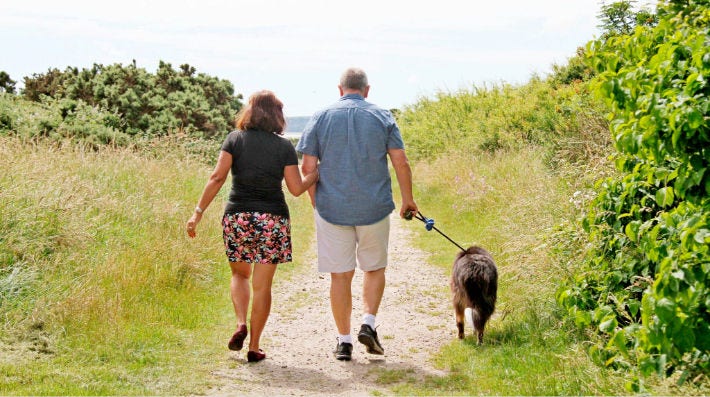
Walking can be great for your physical health. Ideally, it can also give you a chance to be around other people. A cancer diagnosis can feel isolating. Using exercise as a time to catch up with loved ones can offer mental and emotional benefits.
“A walking buddy can help you stay motivated and connected with your community and loved ones,” said Dr. Pritchett. “Walking regularly, especially with another person, can be a key strategy to address the social isolation or stigma that can sometimes come to characterize a person’s cancer journey.”
2. Schedule a daily walk.
Plan your walk for a time you know you’re likely to feel up for it. “It’s probably not the best idea for somebody who’s not an early riser to all of a sudden say, ‘I need to get up at 5:30 a.m. and get my walk out of the way for the day.’ It wouldn’t be a sustainable practice for them,” said Dr. Pritchett.
Instead, start keeping track of when you tend to feel fatigued and when you feel more energized. Then schedule your walk based on those patterns. For example, if you notice you have more energy right after lunch, try scheduling a 15-minute post-meal walk.
3. Find small ways to walk more throughout the day.
Walking doesn’t need to be planned. Opportunities to walk can vary based on where you are in your cancer treatment. For some people, it could mean getting up to walk from the bedroom to the kitchen each morning to make coffee. Others might try parking farther away from the entrance at the grocery store. “It’s good to set up intentional scenarios where there need to be more steps and more mobility,” said Dr. Pritchett.
4. Set measurable goals.
Try to walk a specific distance or a certain number of steps each day. This goal can look different based on where people are in their treatment. Some might aim to walk to the mailbox each afternoon. Others might try to get 10,000 steps in every day.
Digital tools like smartwatches and other wearable devices can be helpful for keeping track, but they aren’t a requirement. Even a simple step pedometer can help, said Dr. Pritchett. As you start feeling better over time, you can try to increase your goal.
Learn more from the American Cancer Society:
Dr. Pritchett is a member of ASCO’s Patient Information Advisory Committee.
- Written by

Written by the American Society of Clinical Oncology (ASCO) with medical and editorial review by the American Cancer Society content team.