Your gift is 100% tax deductible.
Small Intestine Cancer
If you have small intestine cancer or are close to someone who does, knowing what to expect can help you cope. Here you can find out all about small intestine cancer, including risk factors, symptoms, how it is found, and how it is treated.
About small intestine cancer
Small intestine cancer is a cancer of the gastrointestinal (GI) tract. It starts when cells in the small intestine begin to grow out of control. To learn about how cancers start and spread, see What Is Cancer?
In the United States, small intestine cancers are much less common than most other types of GI cancers (such as colon, rectal, stomach, and esophagus cancers), even though the small intestine makes up the largest part of the GI tract.
How the small intestine works
The small intestine is part of the GI tract, also called the digestive tract. The GI tract processes food for energy and rids your body of solid waste.
After you chew and swallow your food, it goes through the esophagus, a tube that carries food through the neck and chest and into the stomach. The stomach is a sac-like organ that helps the digestive process by mixing the food with gastric juices.
The food and gastric juices are mixed into a thick fluid, which is then emptied into the small intestine (also known as the small bowel). The small intestine continues breaking down the food and absorbs most of the nutrients. Even though it's called the small intestine, it's about 20 feet long and is the longest section of the GI tract.
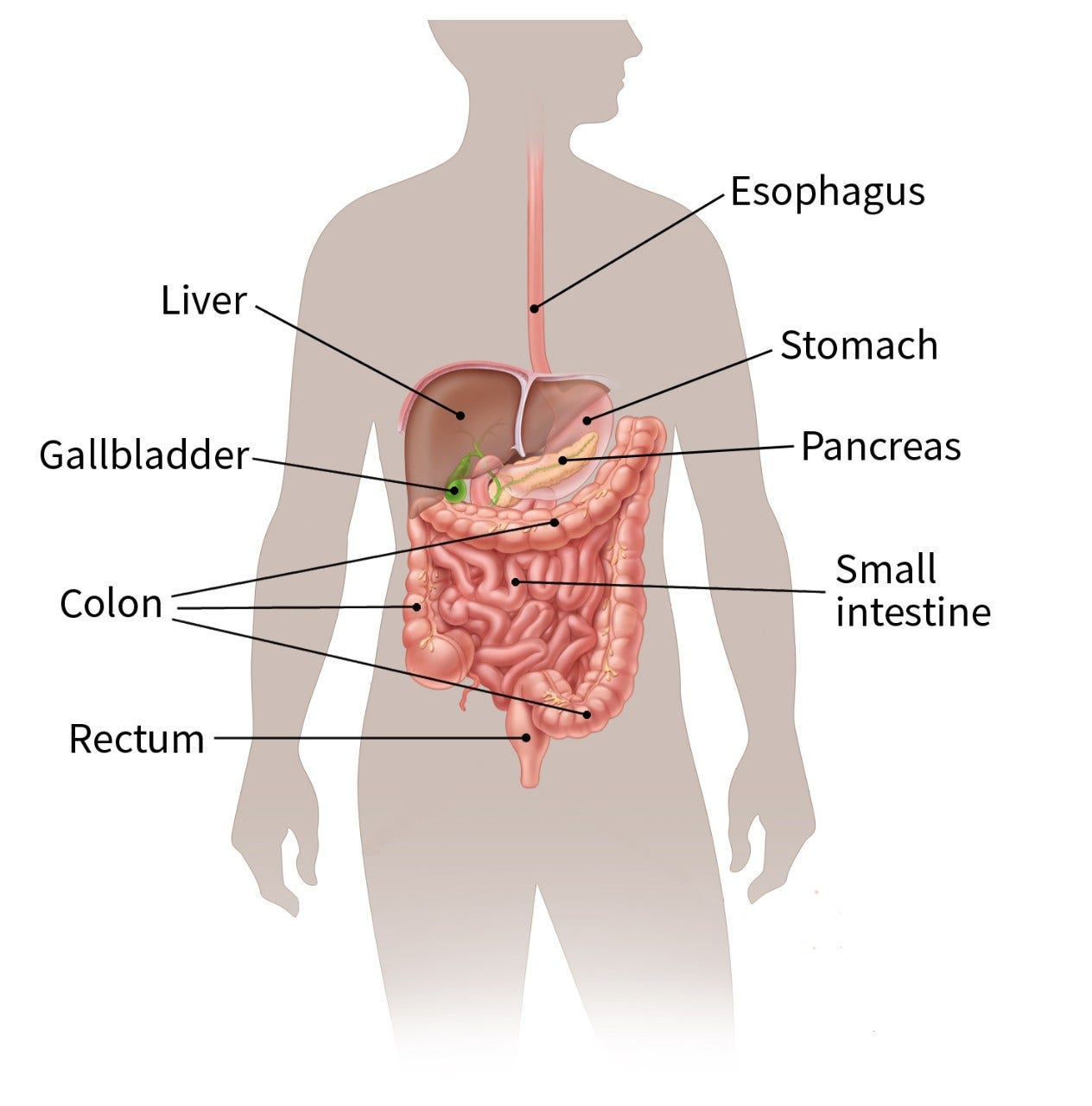
The small intestine has 3 sections:
- The duodenum is the first section and is only about 1 foot long. A short distance from where it connects to the stomach, is the ampulla of Vater. This is where the pancreatic duct and bile duct join and empty into the duodenum. Fluids from the pancreas and liver enter the small intestine here to help further digest food.
- The jejunum and ileum are the second and third sections. They make up most of the small intestine and are where most of the nutrients in food are absorbed into the bloodstream.
The ileum empties into the colon (the first part of the large intestine). This muscular tube is about 4 to 5 feet long. It absorbs water and some remaining mineral nutrients from food matter. The waste left after this process goes into the rectum, where it is stored until it passes out of the body through the anus.
Types of small intestine cancers
The small intestine is made up of many different types of cells, so different types of cancer can start here. There are 4 major types of small intestine cancers:
- Adenocarcinomas start in the gland cells that line the inside of the intestine. They account for about 1 in 3 small intestine cancers.
- Neuroendocrine tumors tend to be slow growing. They are the most common type of small intestine tumor.
- Lymphomas start in immune cells called lymphocytes. They can start almost anywhere in the body, including the small intestine.
- Sarcomas start in connective tissues, such as muscle. The most common sarcomas in the intestine are gastrointestinal stromal tumors (GISTs).
Most small intestinal cancers, especially adenocarcinomas, develop in the duodenum. Most experts think that cancer of the small intestine develops much like colorectal cancer. It first begins as a small growth on the inner lining of the intestine, called a polyp. Over time, the polyp can change into a cancer.
Quick Guides
- Written by
- References

Developed by the American Cancer Society medical and editorial content team with medical review and contribution by the American Society of Clinical Oncology (ASCO).
Chamberlain RS, Krishnaraj M, Shah SA. Chapter 54: Cancer of the Small Bowel. In: DeVita VT, Lawrence TS, Rosenberg SA, eds. DeVita, Hellman, and Rosenberg’s Cancer: Principles and Practice of Oncology. 11th ed. Philadelphia, Pa: Lippincott Williams & Wilkins; 2019.
Doyon L, Greenstein A, Greenstein A. Chapter 76: Cancer of the Small Bowel. In: Niederhuber JE, Armitage JO, Doroshow JH, Kastan MB, Tepper JE, eds. Abeloff’s Clinical Oncology. 6th ed. Philadelphia, Pa: Elsevier; 2019.
Last Revised: February 9, 2026
American Cancer Society medical information is copyrighted material. For reprint requests, please see our Content Usage Policy.
This information is possible thanks to people like you.
We depend on donations to keep our cancer information available for the people who need it most.