Your gift is 100% tax deductible.
Fine Needle Aspiration (FNA) of the Breast
During an FNA, a small amount of breast tissue or fluid is removed from a suspicious area with a thin, hollow needle and checked for cancer cells. This type of biopsy is sometimes an option if other tests show you might have breast cancer, although a core needle biopsy is often preferred. FNA might also be used in other situations.
What is an FNA of the breast?
In an FNA, the doctor uses a thin, hollow needle attached to a syringe to withdraw (aspirate) a small amount of breast tissue or fluid from a suspicious area. If the abnormal area can be felt under the skin, the biopsy needle can be guided into it while the doctor is feeling it.
FNA is most often done if the suspicious area is likely to be a cyst (fluid-filled sac). By removing fluid, the FNA can often help relieve pain from the cyst. FNA can also be helpful if the doctor is unsure whether an area seen on an imaging test is a small cyst or a solid mass.
A doctor called a pathologist will look at the biopsy tissue or fluid under a microscope to find out if there are cancer cells in it.
Ultrasound-guided FNA
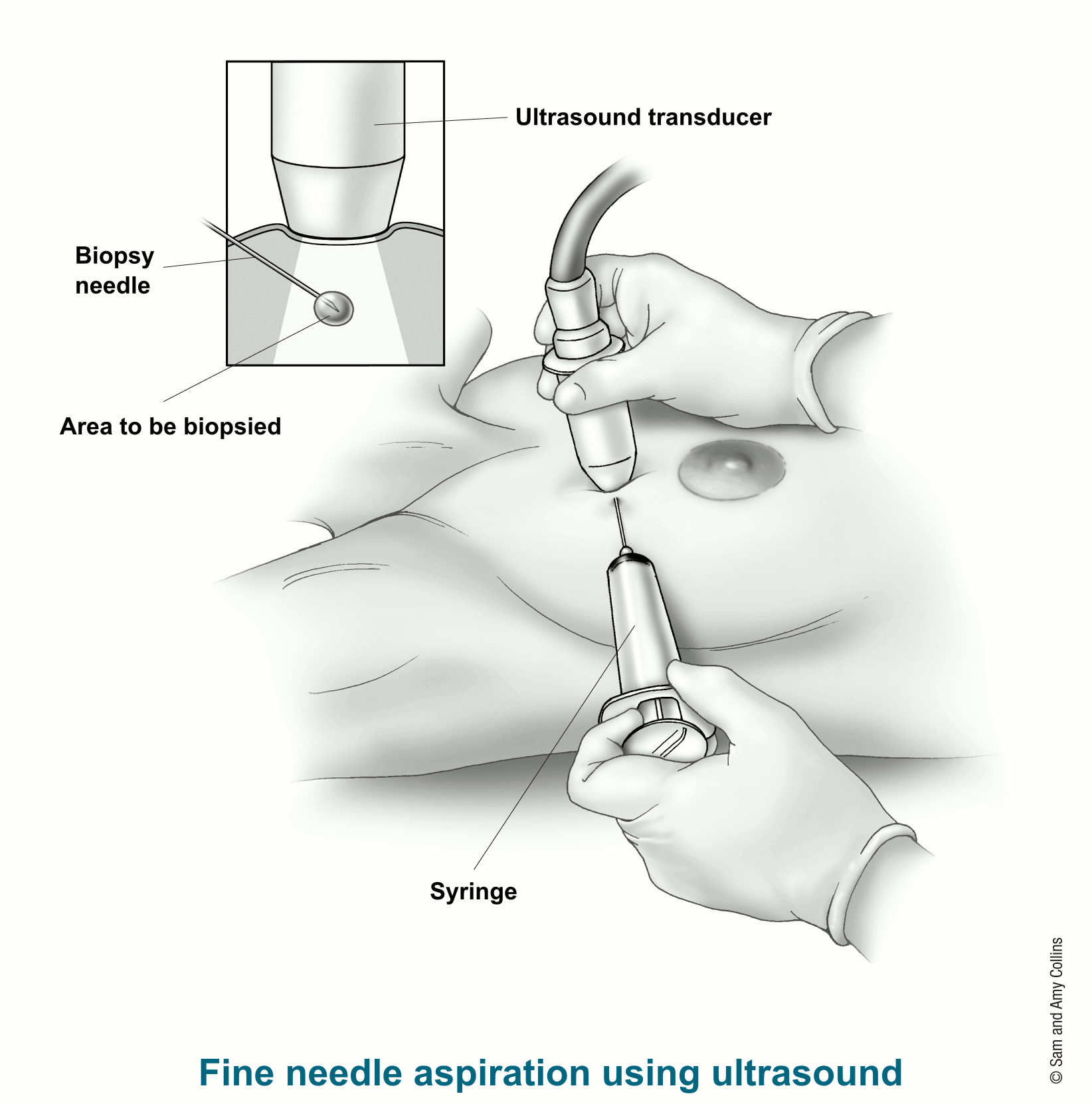
If the lump can't be felt easily, the doctor might watch the needle on an ultrasound screen as it moves toward and into the area. This is called an ultrasound-guided FNA.
Advantages and disadvantages
The main advantages of FNA are that it is fairly quick, it often doesn't require anesthesia, and the skin doesn’t have to be cut, so no stitches are needed and there is usually no scar. Also, in some cases, it’s possible to get the results on the same day.
The disadvantage of an FNA is that it can sometimes miss a cancer if the needle does not go into the cancer cells. It also might not remove enough cells.
If the results of the FNA biopsy do not give a clear diagnosis, or if your doctor still has concerns, you might need a more extensive type of biopsy, such as a core needle biopsy or a surgical (open) biopsy.
What to expect if you have an FNA
An FNA is an outpatient procedure most often done in the doctor’s office.
During an FNA
You will lie on your back, and the skin overlying the abnormal area will be cleaned. You will have to be still while the FNA is being done.
For comfort, your doctor might use a numbing medicine called a local anesthetic, but it's not needed in all cases. The needle used for the biopsy is so thin that getting an anesthetic might hurt more than the biopsy itself.
If ultrasound is used, you might feel some pressure from the ultrasound wand as the needle is put in.
Once the needle is in the right place, the doctor will use a syringe attached to the needle to pull out a small amount of tissue or fluid. This might be repeated a few times. Once the procedure is done, the area is covered with a sterile dressing or bandage.
Getting each biopsy sample usually takes about 15 seconds. The entire procedure from start to finish generally takes around 20 to 30 minutes if ultrasound is used.
After an FNA
Someone on your healthcare team will tell you how to care for the area where the biopsy was done and what you can and can’t do while it heals. You might be told to limit strenuous activity for a day or so, but you should be able to go back to your usual activities after that.
Possible side effects
Biopsies can sometimes cause bleeding, bruising, or swelling. This can make it seem like a breast lump is larger after the biopsy. Most often, this is nothing to worry about, and the bruising and swelling will go away over time. You will get instructions on what to watch for and when you should call the office.
- Written by
- References

Developed by the American Cancer Society medical and editorial content team with medical review and contribution by the American Society of Clinical Oncology (ASCO).
Joe BN, Esserman LJ. Breast Biopsy. 2026. UpToDate. Accessed at www.uptodate.com/contents/breast-biopsy on April 15, 2026.
Radiological Society of North America. Ultrasound-Guided Breast Biopsy. 2023. Accessed at https://www.radiologyinfo.org/en/info/breastbius on April 16, 2026.
Last Revised: July 23, 2026
American Cancer Society medical information is copyrighted material. For reprint requests, please see our Content Usage Policy.
American Cancer Society Emails
Sign up to stay up-to-date with news, valuable information, and ways to get involved with the American Cancer Society.