Your gift is 100% tax deductible.
Ductal Carcinoma In Situ (DCIS)
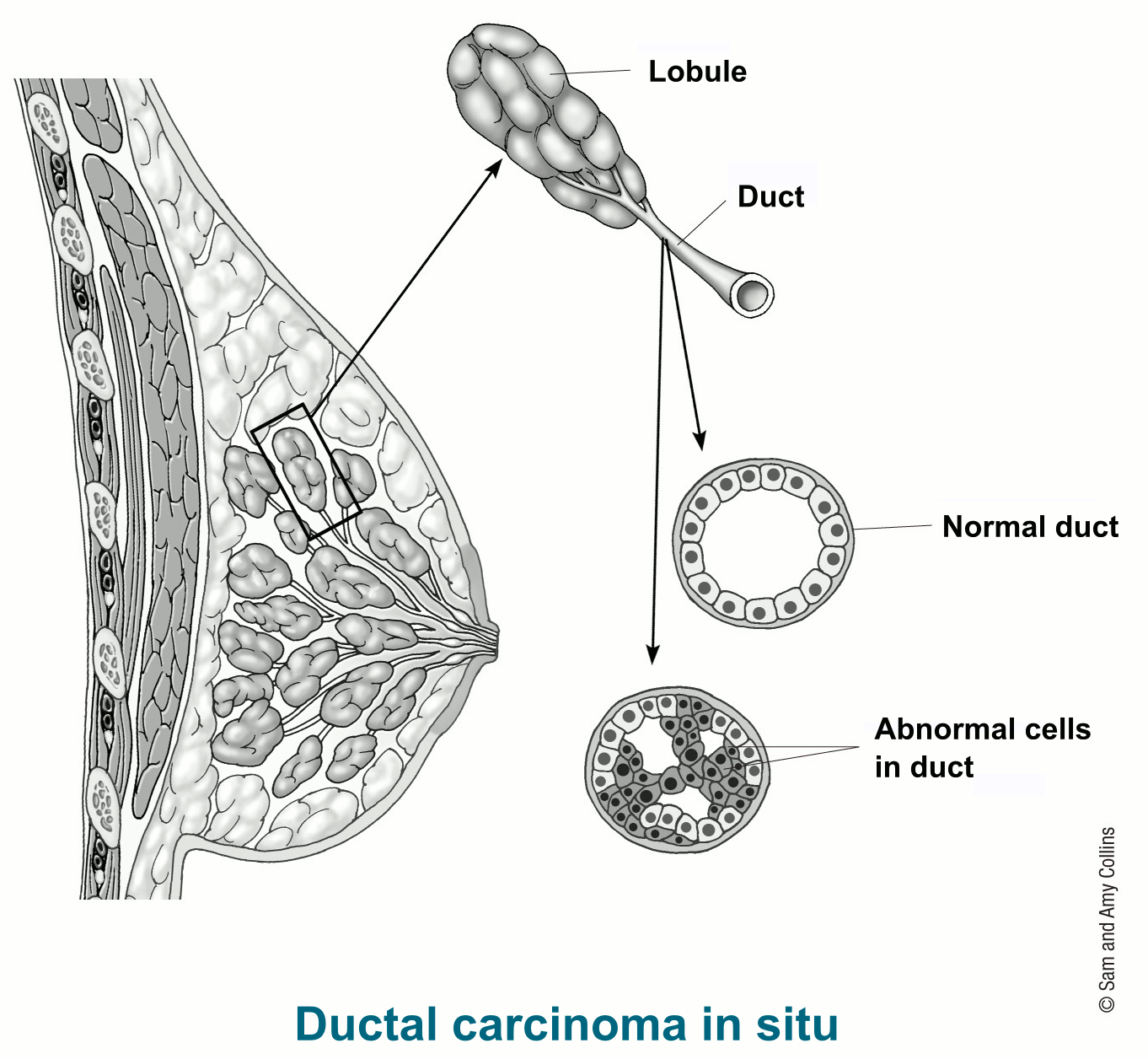
Ductal carcinoma in situ (DCIS), also known as intraductal carcinoma or stage 0 breast cancer, is a non-invasive or pre-invasive breast cancer. About 1 in 5 breast cancers are ductal carcinoma in situ (DCIS). Nearly all women with this early stage of breast cancer can be cured.
On this page
What is DCIS?
DCIS occurs when the cells lining the milk ducts in the breast have changed to cancer cells, but they have not grown through the walls of the ducts into the nearby breast tissue.
DCIS isn’t invasive, meaning that it hasn’t spread into the breast tissue around it and it can’t spread (metastasize) beyond the breast to other parts of the body. If not treated, DCIS can sometimes become an invasive cancer.
Symptoms and diagnosis of DCIS
Most often, DCIS doesn’t cause symptoms on its own. It might show up as a breast lump or nipple discharge, but more often it’s first seen as an abnormal area on a screening mammogram.
DCIS is diagnosed when a breast biopsy shows cancer cells growing within the ducts of the breast but not into deeper layers.
Treating DCIS
Right now, there’s no good way to know for sure if DCIS will become invasive breast cancer or not. Because of this, nearly all people with DCIS will be treated. Studies are now being done to see whether close observation instead of treatment might be an option for some people with low-risk DCIS.
Most often, a person with DCIS can choose between breast-conserving surgery and simple mastectomy. Radiation therapy is usually given after breast-conserving surgery.
Hormone therapy, such as tamoxifen or an aromatase inhibitor, might be an option after surgery if the DCIS is hormone receptor-positive.
- Written by
- References

Developed by the American Cancer Society medical and editorial content team with medical review and contribution by the American Society of Clinical Oncology (ASCO).
Bleiweiss IJ. Pathology of breast cancer. UpToDate. 2026. Accessed at https://www.uptodate.com/contents/pathology-of-breast-cancer on April 2, 2026
Collins C, Laronga C, Wong JS. Breast ductal carcinoma in situ: Epidemiology, clinical manifestations, and diagnosis. UpToDate. 2026. Accessed at https://www.uptodate.com/contents/breast-ductal-carcinoma-in-situ-epidemiology-clinical-manifestations-and-diagnosis on April 2, 2026.
Collins C, Laronga C, Wong JS. Ductal carcinoma in situ: Treatment and prognosis. UpToDate. 2026. Accessed at https://www.uptodate.com/contents/ductal-carcinoma-in-situ-treatment-and-prognosis on April 2, 2026.
Henry NL, Shah PD, Haider I, Freer PE, Jagsi R, Sabel MS. Chapter 88: Cancer of the Breast. In: Niederhuber JE, Armitage JO, Doroshow JH, Kastan MB, Tepper JE, eds. Abeloff’s Clinical Oncology. 6th ed. Philadelphia, Pa: Elsevier; 2020.
Jagsi R, King TA, Lehman C, Morrow M, Harris JR, Burstein HJ. Chapter 79: Malignant Tumors of the Breast. In: DeVita VT, Lawrence TS, Lawrence TS, Rosenberg SA, eds. DeVita, Hellman, and Rosenberg’s Cancer: Principles and Practice of Oncology. 11th ed. Philadelphia, Pa: Lippincott Williams & Wilkins; 2019.
National Cancer Institute. Ductal Carcinoma in Situ (DCIS). 2025. Accessed at https://www.cancer.gov/types/breast/breast-cancer-types/dcis on April 2, 2026.
National Comprehensive Cancer Network. NCCN Clinical Practice Guidelines in Oncology: Breast Cancer. Version 2.2026. Accessed at https://www.nccn.org on April 2, 2026.
Last Revised: June 24, 2026
American Cancer Society medical information is copyrighted material. For reprint requests, please see our Content Usage Policy.
American Cancer Society Emails
Sign up to stay up-to-date with news, valuable information, and ways to get involved with the American Cancer Society.