Cancer Warning Labels Based on California's Proposition 65
You may see warning labels on products that contain chemicals that may cause cancer, birth defects, or reproductive harm. In California, these warnings are required for many household items. People outside California may see them, too, because many companies use the same product labels nationwide instead of making different labels for different states.
Seeing one of these labels does not always mean a product is dangerous when used as recommended. It means the product contains a chemical on California’s warning list.
- What is proposition 65?
- How does California determine which chemicals may be harmful?
- When are warning labels required in California?
- What information is on the warning labels?
- What the warning labels don’t tell you
- How to get more information about a warning label
- Unlabeled products outside of California
- More about California’s cancer warning labels
What is proposition 65?
California’s Proposition 65 refers to the Safe Drinking Water and Toxic Enforcement Act, which became law in the state in 1986.
It is a right-to-know law intended to help people living in California know when they might be exposed to certain chemicals that can be harmful and make informed decisions about protecting themselves from those chemicals.
How does California determine which chemicals may be harmful?
As part of the Prop 65 law, the state must keep a public list of chemicals that are “known to the State of California to cause cancer or reproductive toxicity.”
California’s list of chemicals is maintained by the California Office of Environmental Health Hazard Assessment (OEHHA) and is updated at least once a year.
The state has 2 committees of qualified scientific and health experts. They determine whether a chemical should be added to the list based on:
- New or updated research published in scientific journals or other publications
- Updates made by authoritative organizations such as the International Agency for Research on Cancer (IARC), the US National Toxicology Program (NTP), the US Environmental Protection Agency (EPA), and the US Food and Drug Administration (FDA)
- Decisions made by other states or the federal government
California’s OEHHA list currently contains more than 1000 different chemicals or substances. It includes some chemicals that are not currently considered to be known human carcinogens by the organizations above. This means that not every chemical on the list has been proven to the worldwide scientific community to actually cause cancer in people.
The complete list can be found on the OEHHA website at https://oehha.ca.gov/chemicals.
When are warning labels required in California?
As part of the Prop 65 law, most businesses selling products in California must provide “clear and reasonable warnings” before knowingly exposing people to a chemical on the OEHHA list. This warning is often in the form of a label on the product or its packaging.
A warning is not needed if the expected level of exposure would pose no significant cancer risk.
Businesses are responsible for knowing whether or not their products need to have warning labels.
What information is on the warning labels?
For any product made after August 2018, the Prop 65 labels must have certain elements included.
Warning image or symbol
With some exceptions, a specific warning symbol must be on the label. The symbol is typically a bright yellow triangle with an exclamation point (!) inside the triangle. In certain cases, the symbol may be in black and white.
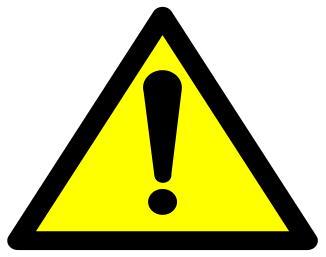
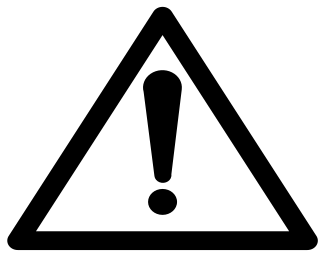
Images courtesy of p65warnings.ca.gov
Warning content
The content of the warning label might look like one of these examples:
WARNING: This product can expose you to [name of chemical], which is known to the State of California to cause cancer. For more information go to www.P65Warnings.ca.gov
WARNING: This product can expose you to chemicals including [name of 1 or more chemicals], which is [are] known to the State of California to cause cancer. For more information go to www.P65Warnings.ca.gov.
WARNING: Cancer risk from exposure to [name of chemical]. See www.P65Warnings.ca.gov.
Other warning label requirements
Some types of products sold in California are required to have specific labels as a result of lawsuits and any court orders that come from them. For example, the required labels on electrical wires, such as computer cables, power cords, and holiday lights, are slightly different.
Labels on lead-containing products
Lead is a metal found in nature and used in many products. Laws and regulations in the US have removed or limited the allowable amount of lead in certain products. These products include gasoline, paint, water pipes, and plumbing fixtures, and some electrical wires, such as computer cables, power cords, and holiday lights.
The warning labels on lead-containing products can look slightly different from the labels on other products. Typically, products with lead-containing warning labels have a bit more detail, like this example:
WARNING: Handling the cord on this product will expose you to lead, a chemical known to the State of California to cause [cancer, and] birth defects or other reproductive harm. Wash hands after handling.
What the warning labels don’t tell you
The Prop 65 warning labels might cause some confusion for people who see them, for a few reasons:
- The label only tells you that a product has a chemical (or chemicals) in it that might cause cancer or affect reproduction. The label isn’t required to list every chemical of concern if there’s more than 1. And before August of 2018, the labels didn’t need to list any chemicals by name.
- The label doesn’t have to say anything about how much of the chemical(s) the product contains, or how a person might be exposed to it. These factors can be very important when determining how much risk it might pose.
How to get more information about a warning label
Businesses are required to put warning labels on products, but they’re not required to list all of the chemicals that might cause problems. They’re also not required to provide the OEHHA with any information about the products.
If you find a warning label on a product and want more information:
- Find the manufacturer. Check for any written information that comes with the product or on its package. If contact information isn’t there, try searching online for the manufacturer’s name.
- Contact the manufacturer. Ask what potentially hazardous substance(s) the product contains and what part of the product it’s in. You might also want to ask how a person might be exposed to the chemical(s) from this product and whether there are ways to reduce the risk of exposure while using the product.
Unlabeled products outside of California
Products that are sold outside of California are not required to have the warning label even if they contain substances that might cause cancer. Some companies that sell products all over the US only put labels on the products sent to California, even though all of their products contain the same compounds.
More about California’s cancer warning labels
For more information and frequently asked questions about Proposition 65, go to: https://www.p65warnings.ca.gov.
- Written by
- References

The American Cancer Society medical and editorial content team
Our team is made up of doctors and oncology certified nurses with deep knowledge of cancer care as well as editors and translators with extensive experience in medical writing.
State of California Office of Environmental Health Hazard Assessment (OEHHA). Proposition 65 Overview. 2025. Accessed at https://oehha.ca.gov/proposition-65 on April 7, 2026.
State of California Office of Environmental Health Hazard Assessment (OEHHA). 2025. Chemical exposure warnings (Proposition 65 warnings). Accessed at https://www.p65warnings.ca.gov/ on April 7, 2026.
Last Revised: April 7, 2026
American Cancer Society medical information is copyrighted material. For reprint requests, please see our Content Usage Policy.
American Cancer Society Emails
Sign up to stay up-to-date with news, valuable information, and ways to get involved with the American Cancer Society.