
HPV (Human Papillomavirus)
HPV (human papillomavirus) is a very common virus. Most people will get an infection at some point in their lives. Learn about HPV and its link to 6 different types of cancer. Get information on HPV testing and HPV vaccines.
What is HPV?
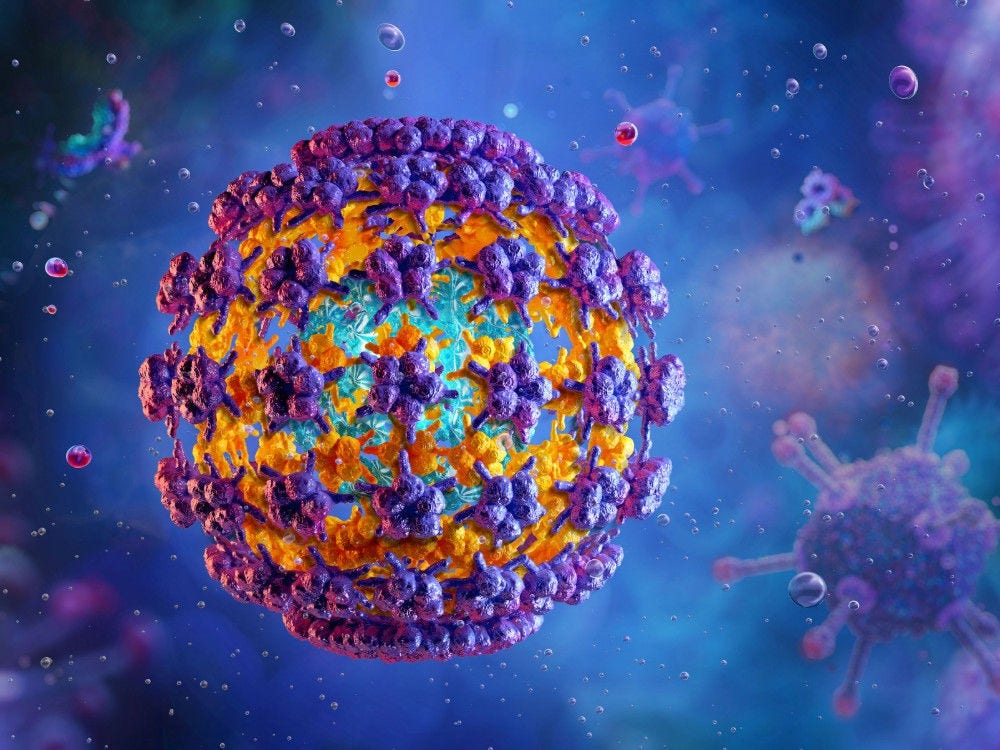
HPV is part of a group of more than 200 related viruses. A virus is a tiny germ that needs to make copies of itself (replicate) to survive and spread. A virus can’t replicate on its own. It needs to enter a living host cell to make more virus copies.
Most HPV infections never cause any problems or symptoms. But long-lasting infection with certain high-risk types of HPV can lead to cancer.
HPV infection and spread
HPVs can only infect cell types in the human body called epithelial cells. To replicate and spread, HPV must enter the body and reach these cells. The cells are found on the surface of the skin and on moist surfaces, called mucous or mucosal membranes.
HPV spreads when an infected area on one person makes direct contact with these cells on another person, usually through tiny tears in their skin that allow HPV to enter their cells.
HPV types
Each HPV type is identified by a number. For example: HPV 16. They are grouped based on differences in their DNA.
- Mucosal HPV types only infect mucosal membranes in the body, such as those on the cervix.
- Cutaneous HPV types only infect dry areas of skin, like the hands.
Different types of HPV can cause different problems or symptoms, although most HPV infections clear on their own without causing any issues.
HPVs that infect mucosal membranes in the genital area and the back of the throat (oropharynx) can spread through sexual contact. Certain HPV types that infect this area, such as HPV 16 and HPV 18, can lead to cancer.
HPV types that infect areas such as the hands and feet can spread through skin-to-skin contact. Certain HPV types that infect these areas can cause warts (papillomas).
How common is HPV?
HPV is very common. The Centers for Disease Control and Prevention (CDC) estimates that over 42 million people in the United States are currently infected with HPV types that can cause disease. About 13 million people in the US get a new HPV infection every year. This includes teenagers and adults.
In about 9 out of 10 people infected with HPV, the body clears the infection on its own within 2 years. But sometimes, the infection doesn’t go away. Chronic, or long-lasting, infection with certain high-risk HPV types can cause certain cancers over time.
HPV cancer prevention
Vaccination helps prevent HPV types that can cause disease from spreading widely and can help prevent HPV cancers.
Regular cervical cancer screening with HPV testing and Pap tests can help find cell changes caused by HPV that might lead to cervical cancer. These changes can often be treated successfully.
Regular dental checkups can also help find problems in the throat that might be caused by HPV.
How is HPV different from herpes?
HPV and herpes simplex virus (HSV), often called herpes, are different viruses that share some similarities.
Both viruses can:
- Affect the skin and mucous membranes.
- Produce bumps, sores, or changes in the genital region and other areas.
- Spread even if a person has no visible symptoms.
However, HPV and HSV cause distinct symptoms. They are treated differently, if treatment is needed.
HSV (herpes)
There are 2 types of HSV: HSV-1 and HSV-2. Both types can cause outbreaks of sores that can be painful or itchy. The sores usually blister, burst, ooze, crust over, and then heal.
- HSV-1 usually causes oral herpes, also called cold sores. Most adults are infected with HSV-1, but most infections do not cause symptoms. It is spread through oral contact, such as kissing.
- HSV-2 usually causes genital herpes. It is most often spread through sexual contact
- Sometimes, HSV-1 can cause genital herpes and HSV-2 can cause oral herpes.
If a person gets infected with HSV, they will have it for life. Most people never have symptoms. Some people get outbreaks occasionally, while others get them frequently.
HSV outbreaks can often be treated effectively with medicines. These work best if treatment starts shortly after an outbreak begins. Some people who get frequent genital herpes outbreaks take medicine every day to prevent outbreaks and lower the chance of passing the virus to others.
HSV infection does not cause cancer.
HPV
Some types of HPV can cause warts on different parts of the body, including the hands, feet, and genitals. Warts can be flat or cauliflower shaped. They often form in clusters. They do not blister or ooze like herpes outbreaks.
Other types of HPV do not cause warts but can cause cancer.
Unlike herpes, most HPV infections go away on their own. But in rare cases, HPV infections can persist. This can cause warts to come back after treatment or cancer to develop.
When to see a doctor
Contact your healthcare team if you are concerned about your risk for HSV or HPV, or if you have bumps, sores, or changes in your genital area or elsewhere. They can help find the cause and recommend treatment if needed.
The CDC only recommends testing for HSV in people who have symptoms. A doctor can order the testing when it’s needed.
Women and people with a cervix should get regularly screened to check for the types of HPV that can cause cancer, even if they have no symptoms.
How is HPV treated?
There is no treatment for HPV itself. But there are treatments for the warts, cervical lesions, and cancers that HPV can sometimes cause. Most HPV infections don’t usually cause symptoms and clear up on their own.
Treating genital warts
If HPV causes visible genital warts, see your healthcare provider so they can be treated. Treatment options include:
- Creams, ointments, and liquids that are applied directly to the wart by you or a healthcare provider
- Freezing with liquid nitrogen (cryotherapy)
- Laser therapy
- Electrocautery, which burns off the wart with an electric current
- Surgically removing the wart
Genital warts often come back after being treated, and they can be treated again.
Treating cervical lesions caused by HPV
HPV infection in the cervix can cause cell changes called lesions. Most cervical lesions go away on their own, but they can progress to cancer in rare cases. Having regular cervical cancer screening tests can find cervical lesions and help determine whether they need to be treated.
If screening or other tests show that a lesion is at high risk of progressing to cancer, treatment of the lesion is often recommended.
The main treatment options include:
- Loop electrosurgical excision procedure (LEEP). A tool with a thin wire loop that carries a small electric current is used to remove the cervical lesion.
- Cold knife conization. A cone-shaped piece of tissue containing the lesion is removed using a scalpel. This is usually done under anesthesia to prevent pain.
Treating HPV cancers
Cancers caused by HPV have different treatment options depending on the type and stage of the cancer. HPV cancers are typically easier to treat when they are found early, are small, and have not yet spread.
Learn more about how HPV cancers are treated:
More resources
Related topics
- Written by
- References

The American Cancer Society medical and editorial content team
Our team is made up of doctors and oncology certified nurses with deep knowledge of cancer care as well as editors and translators with extensive experience in medical writing.
American Cancer Society (ACS). Cancer Prevention & Early Detection Facts & Figures 2025-2026. Atlanta: American Cancer Society; 2025. Accessed at https://www.cancer.org/content/dam/cancer-org/research/cancer-facts-and-statistics/cancer-prevention-and-early-detection-facts-and-figures/2025-cped-files/cped-cff-2025-2026.pdf on September 3, 2026.
Apgar BS, Kittendorf AL, Bettcher CM, Wong J, Kaufman AJ. Update on ASCCP consensus guidelines for abnormal cervical screening tests and cervical histology. Am Fam Physician. 2009;80(2):147-155. Accessed at https://www.aafp.org/afp/2009/0715/p147 on September 3, 2026.
Centers for Disease Control and Prevention (CDC). About HPV. 2024. Accessed at https://www.cdc.gov/hpv/about/index.html on September 3, 2026.
Centers for Disease Control and Prevention (CDC). Screening for genital herpes. 2024. Accessed at https://www.cdc.gov/herpes/testing/index.html on September 3, 2026.
Cooper DB, Carugno J, Dunton CJ, Menefee GW. Cold knife conization of the cervix. In: StatPearls [Internet]. Treasure Island, FL: StatPearls Publishing. Updated October 26, 2023. Accessed at https://www.ncbi.nlm.nih.gov/books/NBK441845/ on September 3, 2026.
Fontham ETH, Wolf AMD, Church TR, et al. Cervical cancer screening for individuals at average risk: 2020 guideline update from the American Cancer Society. CA Cancer J Clin. 2020. doi:10.3322/caac.21628
Mathew J Jr, Sapra A. Herpes Simplex Type 2. In: StatPearls [Internet]. Treasure Island, FL: StatPearls Publishing. Updated March 13, 2024. Accessed at https://www.ncbi.nlm.nih.gov/books/NBK554427 on September 3, 2026.
McQuillan G, Kruszon-Moran D, Flagg EW, Paulose-Ram R. Prevalence of herpes simplex virus type 1 and type 2 in persons aged 14–49: United States, 2015-2016. NCHS Data Brief, no 304. Hyattsville, MD: National Center for Health Statistics. 2018. Accessed at https://www.cdc.gov/nchs/data/databriefs/db304.pdf on September 3, 2026.
Saslow D, Andrews KS, Manassaram-Baptiste D, et al. Human papillomavirus vaccination 2020 guideline update: American Cancer Society guideline adaptation. CA Cancer J Clin. 2020; 7(4): 274-280. doi:10.3322/caac.21616
World Health Organization (WHO). Herpes simplex virus. 2025. Accessed at https://www.who.int/news-room/fact-sheets/detail/herpes-simplex-virus on September 3, 2026.
Last Revised: September 3, 2026
American Cancer Society medical information is copyrighted material. For reprint requests, please see our Content Usage Policy.
American Cancer Society Emails
Sign up to stay up-to-date with news, valuable information, and ways to get involved with the American Cancer Society.



