Sun Safety
Exposure to ultraviolet (UV) radiation from the sun or tanning devices can damage skin cells and increase your risk of skin cancer. Learn how UV rays affect your health, ways to protect your skin, and steps you can take to lower your cancer risk. You can also learn about sunless tanning products and get answers to other common questions about sun safety.
Understanding UV exposure and cancer risk
Ultraviolet (UV) radiation is energy that comes mainly from the sun. While some sunlight helps your body make vitamin D, too much exposure to UV rays can damage skin cells and increase your risk of skin cancer.
Anyone can develop skin cancer, regardless of their skin color or tone. Most skin cancers are caused by too much exposure to UV rays from the sun or artificial sources, such as indoor tanning beds and sunlamps. Understanding safe ways to be in the sun can help you take steps to better protect your skin.
What affects UV exposure?
UV rays are stronger when:
- The sun is highest in the sky, usually between 10 a.m. and 4 p.m.
- It is spring, summer, or early fall.
- You are closer to the equator, where sunlight is more intense year-round.
- You are at higher elevations, such as in the mountains.
- UV rays bounce off surfaces such as water, sand, snow, or pavement.

Protecting yourself from UV rays
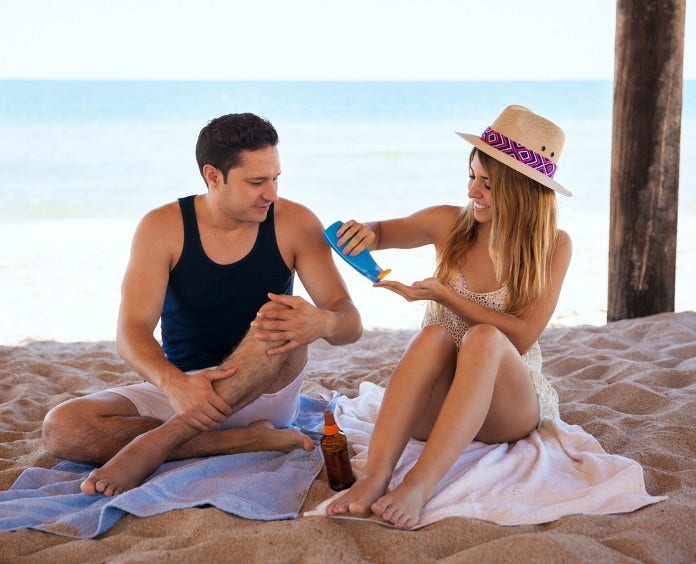
You don’t have to avoid the sun completely to protect your skin. Whether you’re spending time outdoors for work, exercise, or fun, simple sun safety habits can help reduce UV exposure. Learn what steps you can take, such as seeking shade when rays are at their highest, wearing protective clothing, using sunscreen correctly, and avoiding indoor tanning devices. You can also learn about sunless tanning products, how they compare with tanning from UV exposure, and how to use them safely.
Finding skin cancer early
Many skin cancers can be found early, when treatment is more likely to be successful. While protecting your skin from UV rays is important, it’s also helpful to become familiar with your skin so you notice any new or changing spots. Learn how to do a skin self-exam and what changes should prompt you to visit your doctor.

Test your sun safety knowledge
How much do you know about protecting your skin from the sun? Take our sun safety quiz to test your knowledge, learn helpful facts about UV exposure and skin cancer prevention, and find out if there are steps you can take to better protect yourself and your family from harmful UV rays.
More resources
- Written by
- References
The American Cancer Society medical and editorial content team
Our team is made up of doctors and oncology certified nurses with deep knowledge of cancer care as well as editors and translators with extensive experience in medical writing.
Centers for Disease Control and Prevention (CDC). Sun safety facts. 2026. Accessed at https://www.cdc.gov/skin-cancer/sun-safety/index.html on August 20, 2026.
Skin Cancer Foundation. Self-exams save lives. 2024. Accessed at https://www.skincancer.org/early-detection/self-exams/ on August 20, 2026.
US Food and Drug Administration (FDA). Ultraviolet (UV) radiation. 2020. Accessed at https://www.fda.gov/radiation-emitting-products/tanning/ultraviolet-uv-radiation on August 20, 2026.
Last Revised: September 2, 2026
American Cancer Society medical information is copyrighted material. For reprint requests, please see our Content Usage Policy.
American Cancer Society Emails
Sign up to stay up-to-date with news, valuable information, and ways to get involved with the American Cancer Society.